
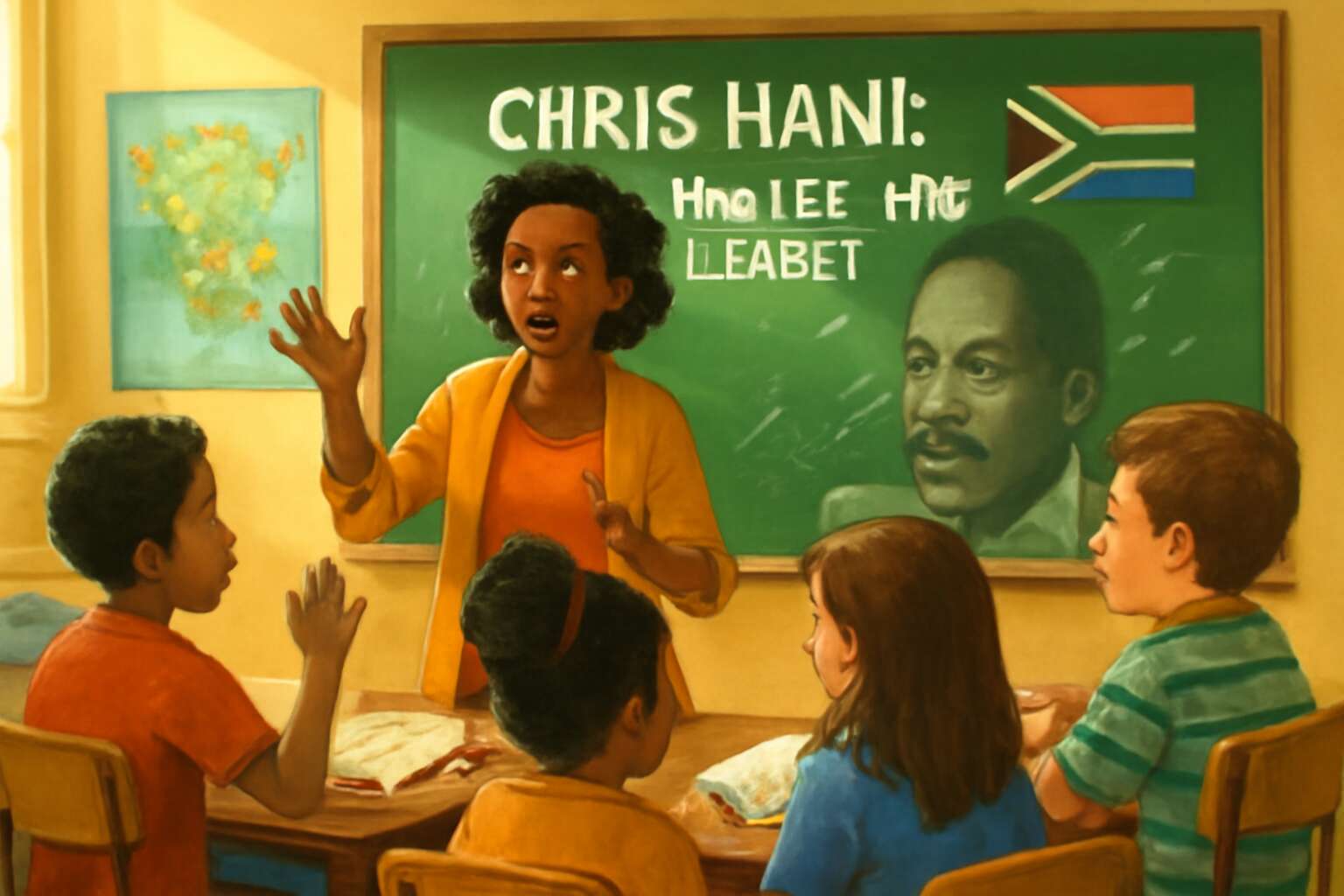
Early Life and Educational Background of Chris Hani
Birth and Childhood
In the quiet corners of South Africa’s Eastern Cape, where the land whispers stories of resilience, Chris Hani’s early life took root amidst humble beginnings. Born in 1942 in the small village of Sada, his childhood was marked by the rugged beauty of rural life and the stark realities of apartheid’s shadow. It was here that the seeds of his formidable spirit were sown, nurtured by the community’s unyielding hope for justice.
Despite the oppressive circumstances, Hani’s pursuit of education became a beacon of resistance. His educational journey, though interrupted by the tumult of political upheaval, laid a foundation that would later propel him onto the national stage. The importance of chris hani education cannot be overstated; it was the crucible where his ideals were forged and his resolve strengthened.
- Early schooling in local mission schools
- Refusal to accept subjugation, fueling his desire for knowledge
- Continued studies that sharpened his leadership and political consciousness
This formative period, steeped in the rich tradition of learning against all odds, set the stage for a life dedicated to the liberation of his people. Hani’s education was not merely about textbooks but about awakening the consciousness of a nation yearning for freedom.
Primary and Secondary Education
From humble beginnings in the rural landscapes of South Africa’s Eastern Cape, Chris Hani’s early education played a pivotal role in shaping his indomitable spirit. Attending local mission schools, he was immersed in a world where every lesson became a act of resistance against the oppressive apartheid regime. The pursuit of knowledge in these formative years was not just about academics; it was about awakening a consciousness that would later ignite the fight for freedom.
Hani’s educational journey was marked by resilience and an unwavering desire to learn. Despite limited resources and the weight of systemic discrimination, he refused to accept subjugation. His early schooling laid a sturdy foundation, sharpening his leadership and political awareness. This period was more than mere schooling—it was a crucible where his ideals took shape, driven by a relentless quest for justice and equality.
- Early education in mission schools
- Development of political consciousness
- Inspiration for lifelong activism
In a land where opportunity was often denied to Black South Africans, Chris Hani’s pursuit of education exemplifies resilience and hope. His early years, deeply rooted in community and tradition, underscored the transformative power of learning—an enduring legacy that fueled his lifelong dedication to liberation and the betterment of his people.
Higher Education and Academic Achievements
Chris Hani’s educational journey is a testament to resilience and an unyielding thirst for knowledge. Despite the oppressive backdrop of apartheid South Africa, his pursuit of education was relentless—an act of defiance that laid the groundwork for his later role as a fearless leader. From humble beginnings, Hani’s early education in mission schools ignited a spark that would burn brightly throughout his life.
Higher education was a crucial chapter in shaping his worldview. Hani attended the University of Fort Hare, an institution renowned for nurturing political leaders and activists. There, he sharpened his ideological tools, engaging in spirited debates and developing a keen sense of social justice. His academic achievements weren’t just about earning degrees; they were about equipping himself with the knowledge and skills necessary to challenge systemic injustice.
Some notable milestones in his academic journey include:
- Graduating with a diploma in education, which underscored his commitment to community upliftment.
- Participating in student movements that fueled his political consciousness and activism.
Chris Hani’s education was more than a personal achievement—it was a catalyst that propelled him into the heart of South Africa’s liberation struggle. His academic pursuits exemplify how learning can be a powerful weapon against oppression, inspiring generations to fight for justice with knowledge as their ally.
Educational Influences on Chris Hani’s Activism
Family and Community Impact
In the mosaic of Chris Hani’s life, the threads of family and community played an indelible role in shaping his unwavering commitment to justice. His upbringing was steeped in the oral traditions and collective consciousness of his community, which fostered an acute awareness of social disparities. These early influences did more than inform his worldview—they ignited a fervent desire to challenge systemic oppression through education and activism.
While formal education provided Hani with critical tools, it was the embedded values within his family that propelled him toward revolutionary ideals. His parents, entrenched in the struggle for equality, imparted lessons of resilience, solidarity, and moral integrity. These lessons manifested in his lifelong dedication to empowering marginalized voices. Moreover, his community’s experiences—marked by hardship yet rich in communal bonds—became a fertile ground for his activism. They reinforced the notion that true change stems from collective effort, a principle that would define his leadership in South Africa’s tumultuous fight against apartheid.
Notably, Hani’s educational journey extended beyond the classroom, embracing the lived experiences of those around him. This symbiotic relationship between personal growth and community impact underscores how deeply intertwined his education was with his role as an agent of transformation. His story exemplifies how education rooted in cultural identity and communal values can forge leaders capable of inspiring profound societal shifts.
Influence of Educational Institutions
Educational institutions played a pivotal role in shaping Chris Hani’s unwavering commitment to justice and equality. From the early days of his schooling, Hani was exposed to a curriculum that, while limited under apartheid, fostered critical thinking and resilience. His experiences within these institutions ignited a passion for learning that transcended the classroom, fueling his awareness of systemic injustice.
As he advanced in his education, Hani immersed himself in environments that emphasized social responsibility. These settings were more than just places of academic pursuit—they became fertile ground for revolutionary ideas. The influence of his education extended beyond textbooks, inspiring him to challenge oppressive systems and advocate for change. His journey exemplifies how foundational educational experiences can cultivate leaders capable of transforming society.
Role of Formal and Informal Learning
In the shadowed corridors of his formative years, the influence of both formal and informal learning carved deep into the soul of Chris Hani. His education was more than mere textbooks; it was a crucible where resilience and defiance were forged. The constraints of apartheid’s curriculum could not contain his burgeoning awareness of systemic injustice, igniting a fervent desire for change.
Beyond classroom walls, informal learning—through community interactions, clandestine discussions, and shared stories—became vital. These experiences nurtured his revolutionary spirit, transforming him into a leader driven by a profound sense of social responsibility. It was within these shadowed spaces that the seeds of activism took root, nurtured by a relentless pursuit of justice.
- Uncovering hidden truths through community engagement
- Developing resilience amid oppressive systems
- Fostering a revolutionary mindset beyond formal education
Chris Hani’s education, both formal and informal, was an intricate web of learning that fueled his unwavering commitment to justice. It was a testament to how education, in its many forms, can become a potent force against the darkness of oppression, shaping a leader capable of transforming society’s very fabric.
Chris Hani’s Education and Political Development
Foundations of Political Thought
Chris Hani’s education laid the groundwork for a life’s mission rooted in justice and resistance. His early exposure to the socio-political landscape of South Africa ignited a passion that would shape his political thought for decades. The foundations of his political development can be traced to his formative years, where education was not merely a pursuit of knowledge but a catalyst for change.
During his academic journey, Hani immersed himself in the study of political theory and liberation philosophies, which became the bedrock of his ideological stance. His education was not confined to textbooks; it was a dynamic process fueled by real-world struggles and mentorship from revolutionary thinkers. The influence of educational institutions was profound, fostering critical thinking and a revolutionary mindset that would later challenge apartheid’s brutal regime.
In understanding Chris Hani’s education, it is essential to recognize the role of both formal schooling and informal learning—each shaping his worldview and commitment. His development underscores the importance of a holistic approach to education in cultivating leaders capable of inspiring profound societal transformation. Truly, his journey exemplifies how the right educational foundations can forge a resilient and visionary leader.
Engagement in Student Movements
Chris Hani’s education was more than textbooks and lectures—it was a fiery crucible that forged a leader with an unyielding commitment to justice. His early years immersed him in the turbulent socio-political landscape of South Africa, nurturing a revolutionary mindset that would fuel his lifelong fight against apartheid. It’s fascinating how a solid educational foundation can serve as the catalyst for profound societal change.
Hani’s journey through formal schooling provided him with essential knowledge, but it was his informal learning—mentorship from revolutionary thinkers and participation in student movements—that truly shaped his political development. These encounters ignited a passion for liberation, transforming him from a curious student into a formidable activist. His active engagement in student movements demonstrated how education can be a powerful tool for resistance and change.
- Participation in student protests
- Engagement with radical political ideas
- Building networks with like-minded peers
Such experiences underscored that education isn’t confined to classroom walls; it’s a dynamic process that includes real-world struggles and mentorship. This holistic learning environment enabled Hani to develop a revolutionary outlook, setting the stage for his pivotal role in South Africa’s liberation movement. Truly, his story exemplifies how the right blend of formal education and activism can produce a leader capable of inspiring societal transformation.
Academic Perspectives and Views on Education
Chris Hani’s education was anything but conventional. While textbooks played their part, it was his engagement with radical political ideas and mentorship from revolutionary thinkers that truly molded his worldview. His journey exemplifies how education extends beyond classroom walls—a lesson that resonates deeply in South Africa’s fight against apartheid.
From an academic perspective, many scholars highlight how Hani’s education laid a solid foundation for his political activism. His exposure to diverse philosophies and revolutionary perspectives fueled his commitment to justice and equality. His participation in student movements wasn’t just about protests; it was a crucible for developing leadership skills and strategic thinking.
- Formal schooling provided essential knowledge and discipline.
- Informal learning through mentorship and activism sharpened his revolutionary outlook.
- Networking with like-minded peers created a resilient support system that propelled his political career.
Academic perspectives agree that Chris Hani’s education—both formal and informal—was pivotal in transforming him into a leader capable of inspiring societal transformation. His story underscores the profound impact of a holistic educational approach, blending academic rigor with real-world activism—truly a masterclass in revolutionary education for South Africa’s future leaders.
Legacy of Chris Hani’s Education in South Africa
Impact on Political Education
Chris Hani’s education legacy in South Africa transcends mere academic achievement; it embodies a profound transformation of political consciousness within a nation scarred by injustice. His educational journey—marked by resilience and an unyielding quest for truth—shaped a generation that refused to accept oppression as inevitable. The ripple effect of his educational foundations fueled a deep-seated awareness of social justice, inspiring countless students to challenge the status quo.
Hani’s role in fostering political education was instrumental in cultivating a consciousness rooted in human dignity and resistance. His emphasis on critical thinking and activism created a fertile ground for future leaders who understood that education is a catalyst for societal change. Recognizing the power of formal and informal learning, Hani demonstrated that education extends beyond textbooks—it’s a moral imperative that compels individuals to act. His legacy continues to influence South Africa’s political landscape today, reminding us that education, at its core, is an act of defiance against tyranny.
Educational Policies Inspired by Hani’s Ideals
The ripple effects of Chris Hani’s education extend far beyond the classroom, shaping the very fabric of South Africa’s political landscape. His unwavering commitment to education as a tool for liberation ignited a movement that continues to inspire generations. The legacy of Chris Hani education is etched into policies that prioritize social justice, equality, and active citizenship, serving as a beacon for transformative change.
In the wake of his influence, several educational policies have been inspired by Hani’s ideals, emphasizing the importance of critical engagement and moral responsibility. These policies aim to foster a new wave of leaders who understand that education is not merely academic but a moral act of resistance. For instance, the integration of social justice into curriculum frameworks echoes Hani’s vision of education as a catalyst for societal emancipation.
- Promoting inclusive learning environments that reflect South Africa’s diverse fabric
- Embedding human dignity and activism at the core of educational practices
- Encouraging critical thinking and civic engagement among students
Such initiatives are a testament to how Chris Hani education continues to influence policy formulation, ensuring that South Africa’s future leadership remains rooted in principles of justice and resilience. His educational legacy is a living testament to the power of knowledge as a force for societal transformation, inspiring ongoing efforts to craft an equitable and enlightened nation.
Hani’s Influence on Youth and Student Movements
Chris Hani’s unwavering dedication to education ignited a powerful movement among South Africa’s youth, fostering a deep sense of resilience and hope. His influence reaches beyond policies and classrooms—he inspired generations of students to see education as a weapon for liberation and societal change. The legacy of Chris Hani education is woven into the fabric of youth activism, urging young minds to challenge injustice and advocate for social justice.
In particular, Hani’s emphasis on critical engagement and moral responsibility has galvanized student movements across the nation. Many young leaders cite his teachings as the catalyst for their activism, inspiring them to pursue education not just for personal growth but as a tool for societal emancipation. The enduring impact of Chris Hani education continues to shape the aspirations of South African youth, empowering them to stand resilient in the face of adversity.
- Empowering young people to see education as a form of resistance.
- Encouraging active participation in civic and social issues.
<li Fostering a new generation committed to justice, equality, and societal transformation.
Resources for Learning More About Chris Hani’s Educational Journey
Biographies and Documentaries
For those seeking a deeper understanding of the transformative journey that shaped Chris Hani’s formidable legacy, exploring biographies and documentaries offers invaluable insight. These resources illuminate the nuanced layers of his educational journey, revealing how formal schooling intertwined with his relentless pursuit of justice and liberation. Hani’s education was not merely about acquiring knowledge; it was a crucible that forged a resilient revolutionary spirit rooted in South Africa’s turbulent history.
To truly appreciate the depth of Chris Hani’s education, consider engaging with comprehensive biographies that chronicle his early influences, ideological development, and the role of informal learning in his activism. Documentaries, in particular, serve as powerful visual narratives, capturing the emotional and intellectual landscape that propelled him into the forefront of anti-apartheid resistance. They reveal how his educational experiences transcended traditional boundaries, inspiring generations of youth and political thinkers alike.
- Biographies such as “Chris Hani: The Conscience of the Revolution” provide detailed accounts of his academic and political evolution.
- Documentaries like “Hani: Voice of South Africa” offer visceral insights into his personal journey and ideological convictions.
By immersing oneself in these educational resources, readers can gain a profound appreciation of how Chris Hani’s education was a catalyst for social change, embodying the moral complexities and relentless pursuit of equality that define his legacy.
Academic Articles and Journals
For those eager to delve deeper into the intricacies of Chris Hani’s education, academic articles and journals offer a treasure trove of insights. These scholarly resources dissect the evolution of his educational philosophy, revealing how formal schooling complemented his informal learning experiences and shaped his revolutionary outlook. Such writings often explore how Hani’s educational background influenced his political activism and commitment to social justice.
Engaging with peer-reviewed journals allows readers to appreciate the nuanced relationship between his academic pursuits and his role in the anti-apartheid movement. Many articles analyze the impact of educational policies on his ideological development, providing context for his leadership style and strategies. For those interested in comprehensive analysis, accessing these academic publications can illuminate the profound connection between Chris Hani’s education and his enduring legacy in South African history.
Educational Programs and Museums
For those eager to explore the depths of Chris Hani’s educational journey, a wealth of resources awaits that illuminate the man behind the revolutionary icon. Educational programs and museums dedicated to his legacy serve as vibrant portals into his formative years and ideological evolution. These institutions not only preserve his memory but also offer immersive experiences that highlight the significance of his educational background in shaping South Africa’s history.
Visitors can engage with curated exhibits that showcase the influence of formal schooling alongside informal learning experiences, revealing how these shaped his commitment to social justice. To deepen understanding, many museums feature guided tours and educational workshops focused on Chris Hani’s life, making his story accessible and inspiring to a new generation of learners. For an enriching exploration, consider the following:
- Visiting the Chris Hani Museum in South Africa, which offers comprehensive insights into his educational and political development.
- Participating in local educational programs that emphasize his role in anti-apartheid activism.
- Attending public lectures and seminars dedicated to his legacy, often hosted by universities and cultural institutions.
These resources provide a compelling view of how his education was a catalyst for social change, underscoring the enduring relevance of Chris Hani’s story today.