
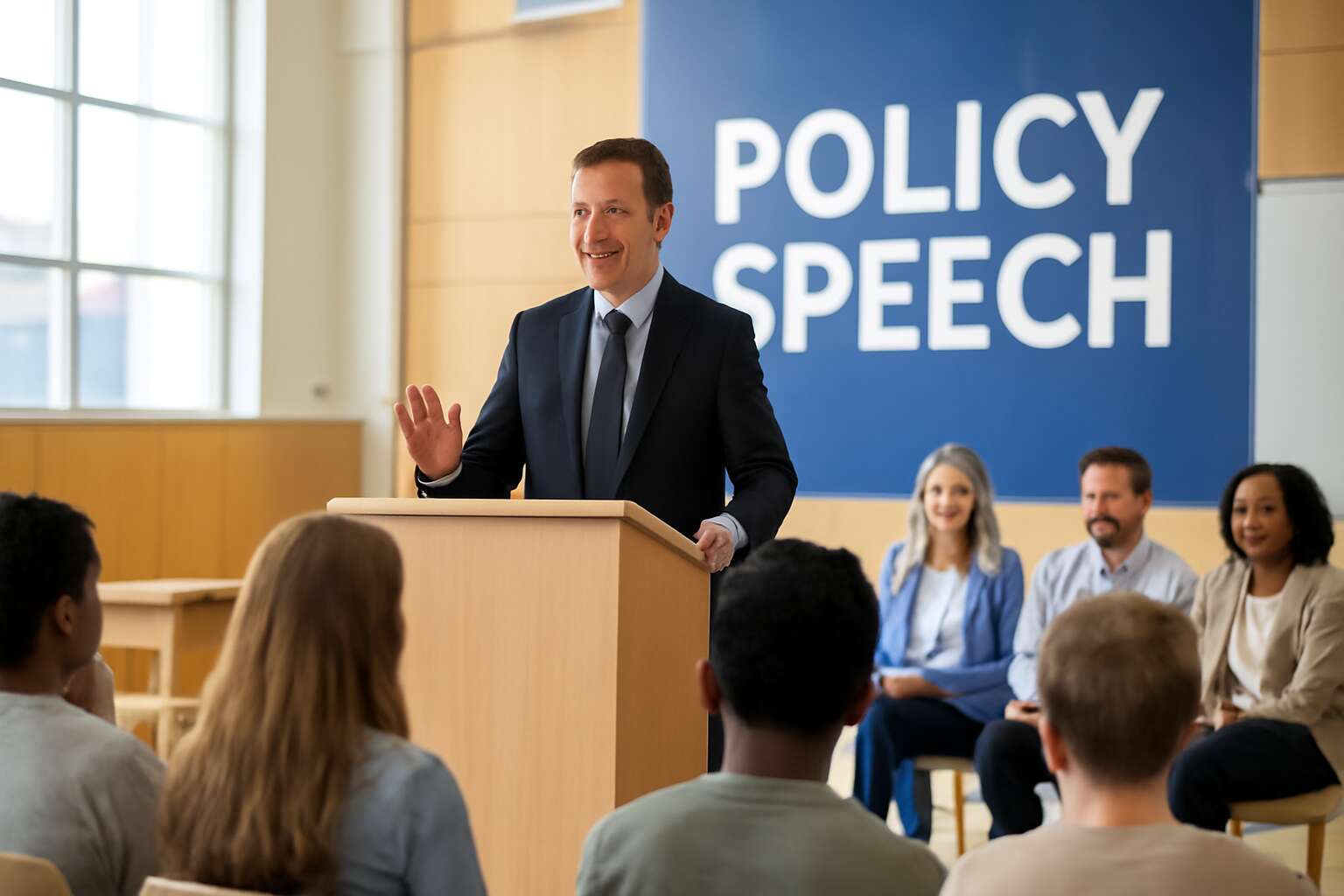
Understanding the role of the education minister
Definition of the role and scope of authority
More than a fifth of the national budget goes to education, shaping classrooms from Limpopo to the Cape. The education minister sets the course, turning that investment into policy, standards, and opportunity. That influence isn’t abstract—it reaches every school, teacher, and learner!
The role centers on policy, funding, and performance standards that travel from national to local level. It also guides curriculum, teacher development, and oversight. The education minister can:
- set national priorities and policy direction
- allocate funding and track outcomes
- shape assessments and accountability measures
In practice, this means coordinating with provinces, overseeing curriculum reform, and steering responses to crises in schools. Mandela offered a guiding warning: “Education is the most powerful weapon we can use to change the world.” The minister must balance long-term reform with urgent classroom needs, a demanding but essential mandate in South Africa.
Key responsibilities and daily duties
Mandela’s words still ring true in South Africa’s classrooms: “Education is the most powerful weapon we can use to change the world.” The education minister carries that promise daily, turning policy into the rhythm of schools, buses, and backpacks across the nation.
Understanding this role means tracing the minute-by-minute duties that keep schools moving. From early-morning briefings to late-evening data reviews, the office coordinates with provinces, guides curriculum turns, and keeps the spotlight on learner outcomes and the health of the teaching profession.
- Coordinate with provincial departments to translate national aims into classroom practice.
- Monitor dashboards and budgets, ensuring resources reach schools in need.
- Engage with teachers, parents, and community leaders to explain policy shifts and collect feedback.
In this role, strategy must marry long-term reform with urgent classroom needs, balancing ambition with on-the-ground realities that shape every learner’s day!
How an education minister differs from other education leaders
“Education is the most powerful weapon we can use to change the world,” Mandela reminds us, and the education minister transposes that creed into the rhythm of policy and practice. This role sits above schools yet below parliament, weaving national aims into provincial realities while staying tethered to learner outcomes. Unlike school leaders who steward a single campus, the education minister navigates funding, curriculum reform, and public dialogue on a national scale, translating bold dreams into measurable progress.
Here’s how the education minister differs from other education leaders:
- Aligns national policy with provincial implementation and classroom practice.
- Oversees budgets, dashboards, and accountability across jurisdictions.
- Balances urgent classroom needs with long-range reform through stakeholder dialogue.
That orchestration is the heart of the role — magnifying policy into everyday learning.
Paths to becoming an education minister
In South Africa’s fast-evolving classrooms, the education minister stands at the crossroads where bold policy meets everyday learning. The role demands not just vision but the stubborn patience to see reforms translate into better learner outcomes!
Paths to ascent typically align experience with public service insight—and the journey can be traced in several durable strands:
- Public governance and policy oversight
- Experience in education administration and reform
- Strategic communication and stakeholder engagement
- Sound academic credentials and credibility with learners’ voices
These routes mix ground-level governance with a taste for long-range reform, demanding resilience, diplomatic tact, and a quiet moral compass.
In practice, the path is rarely linear, demanding constant recalibration of values, data, and voices from learners, teachers, and communities alike.
Typical organizational structure in the education ministry
In South Africa’s evolving classrooms, the education minister holds the compass. More than 60% of public schools report infrastructure gaps, a vivid reminder that bold policy must translate into everyday learning. The table demands listening as much as directing—and turning data into dignity for every learner!
The ministry is a layered machine where intent meets implementation. Policy and Planning frame priorities; Curriculum and Assessment set standards; Teacher Development nurtures classrooms; Infrastructure and School Services sustain campuses; Monitoring and Evaluation tracks progress.
- Policy and Planning Directorate
- Curriculum, Assessment and Standards
- Teacher Development and Support
- Infrastructure and School Services
- Monitoring and Evaluation
The flow between national vision and provincial practice requires diplomacy, listening, and a quiet moral compass. In this architecture, the champion is the portfolio that binds learner voices, teacher expertise, and community hopes into a functioning engine of growth.
Top policy areas overseen by the education minister
National curriculum and standards
“Education is a map, not a destination.” The education minister plants the compass for a diverse nation in South Africa, ensuring every learner can navigate toward opportunity with clarity and dignity.
Top policy areas center on the national curriculum and standards—defining what students should know, how progress is tracked, and what constitutes readiness for further study or work.
Within those bounds, the education minister also shapes language policy, inclusive access, and resource allocation to close gaps and elevate quality across schools and districts. The policy toolkit includes:
- National curriculum coherence across grades and subjects
- Assessment frameworks and performance standards
- Teacher development, professional standards, and inclusive education
These choices ripple through classrooms, communities, and the nation’s future, underscoring how policy and practice meet in the daily life of learning.
School funding and resource allocation
Across South Africa’s classrooms, aging facilities and unreliable utilities still dim the learning glow for many learners. In fact, one in four public schools report facilities in poor condition. The education minister channels funding and resource allocation to close that gap, turning budgets into brighter, more navigable spaces of opportunity.
Key policy areas include equitable funding, targeted infrastructure upgrades, and digital access for all schools, spanning capital works, maintenance, transport subsidies, and reliable ICT.
- Infrastructure upgrades and maintenance
- Equitable per-learner funding across districts
- Digital resources and connectivity for classrooms
Alongside budgets, the education minister emphasizes transparent procurement and accountability to ensure every rand fuels learning.
Teacher recruitment, training, and retention
One in four public schools reports facilities in poor condition, yet the education minister orchestrates a pivot from neglect to opportunity. From townships to coastal towns, leadership is steering policy toward learning environments that nurture curiosity as much as curriculum—bright futures ahead!
Top policy areas shape every classroom moment.
- Equitable per-learner funding across districts, ensuring access to basics and targeted resources;
- Sustainable infrastructure upgrades and proactive maintenance to keep facilities safe and capable;
- Digital learning ecosystems—connectivity, devices, and curated resources that empower teachers and learners.
Under the education minister, transparent procurement and accountability ensure every rand fuels learning.
Assessment and accountability systems
“The classroom is a data-rich ecosystem,” a veteran principal once said, and the education minister converts that truth into policy that fuels learning. Across districts, assessment and accountability systems are designed not as gatekeeping but as guides—turning numbers into targeted support and real-time improvement.
Under the education minister, these systems emphasize transparency, validity, and continuous refinement. A few core elements shape every classroom moment:
- National assessment frameworks that balance summative and formative insights
- Teacher-level evaluation that informs professional growth
- School performance dashboards accessible to communities
- Independent audits and timely public reporting
With a steady cadence of reviews and targets, the education minister ensures accountability without punitive overhang, aligning policy with student outcomes and equitable opportunity.
Special education and inclusive education
In South Africa, classrooms are quietly redefining inclusion, and the education minister is steering that transformation. Special education and inclusive education sit at the top of policy priorities, from early screening to tailored supports that travel from grade to grade. The aim is clear: remove barriers, harness diverse talents, and ensure every learner can participate with dignity in multilingual, culturally rich schools. That blend of guardrails and ground-level imagination shapes daily practice and long-term outcomes alike.
Key policy areas in this arena include:
- Accessible classrooms and universal design that benefits all learners
- Professional development in inclusive pedagogy and assistive technologies
- Coordinated early intervention and multi-disciplinary support teams
These commitments translate into more equitable opportunities across South Africa’s diverse learner landscape.
Challenges and opportunities facing education ministers
Funding constraints and budget cycles
In South Africa, the education minister negotiates a budget that feels more like a chessboard than a ledger, where every move reshapes classrooms and futures. Money is the map; classrooms are the destination.
Chronic funding constraints collide with tight budget cycles, forcing tough prioritization and late disbursements. The tension—almost supernatural—between need and available funds tests decisions daily.
- Mid-year budget reallocation
- Grant disbursement delays
- Strategic capital prioritization
For the education minister, transparent reporting and thoughtful partnerships turn scarcity into steady progress, shaping a more equitable future for learners.
Equity and access for underserved communities
“Education is the most powerful weapon,” Mandela said, and the education minister wields it under a sky bruised by inequality. In South Africa’s classrooms, equity is not a luxury but a survival tactic, and every policy breathes into the lives of underserved communities.
Challenges haunt access: long distances, unreliable transport, and the digital divide that widens every hour. Yet opportunities glimmer in community partnerships, mobile learning hubs, and multilingual curricula designed to reach every child.
- Rural transport and safe school routes
- Affordable digital devices and connectivity
- Localized teacher support in underserved schools
Opportunities demand bold, quiet courage: targeted bursaries, apprenticeship circuits, and partnerships that stretch scarce resources into wide-reaching impact. The minister imagines a lattice of schools where every learner, including learners with disabilities, can enter with dignity and hope.
Impact of technology and digital learning
One in three communities still struggle with connectivity, a stubborn gatekeeper of learning. The education minister stands at a crossroads of policy and possibility, where every classroom can feel like a turning point—or a cul-de-sac.
Challenges in South Africa span logistics and design: students navigate difficult routes, transport can be patchy, and the digital divide persists. The official in charge must steward multilingual materials, safe school environments, and funding cycles that keep lights on in classrooms.
Yet opportunity glows brighter than the glare of screens, a whisper of possibility in the halls. Mobile learning hubs, offline digital libraries, and affordable devices unlock new access. Technology is a lifeline—enabling flexible teaching, data-informed planning, and inclusive pedagogy that honors diverse languages and abilities.
- Community partnerships expanding device access
- Apprenticeship pipelines linking schools with industry
- Localized digital resources for regional needs
Public opinion and political considerations
Bold shifts in schooling hinge on public will. A recent poll hints that nearly 60% of South African voters say education quality will determine their support in the next election. The education minister stands at a crossroads where rhetoric must meet receipts—policy must translate into brighter classrooms and steadier futures!
- Voter expectations for visible results
- Transparency in spending and reporting
- Trust in multilingual and inclusive practices
Beyond polls, political calculations shape budgets and timelines. The office navigates coalition demands, press scrutiny, and the need to deliver equity without creating policy fatigue. In this heavy air, leadership becomes a moral test.
Policy implementation and change management
In South Africa, a poll shows nearly 60% of voters tie education quality to their support, turning every policy move into a living test for the education minister.
Policy implementation and change management are less about grand declarations and more about synchronizing ministries, districts, and schools. Bridges must be built between budget cycles, teacher deployment, and the pulse of classrooms, or reforms wither!
- Aligning budgets with provincial priorities and school calendars
- Engaging stakeholders openly and reporting transparently
- Steady leadership to weather coalition pressures and political cycles
Opportunities bloom when data-guided decisions unlock classroom magic, with technology, multilingual learning, and local partnerships translating rhetoric into brighter futures.
The education minister sits at a threshold where accountability meets aspiration—and the real test is sustaining momentum without policy fatigue for the position.
Case studies and regional variations in education governance
Comparative overview of different countries’ education ministries
<p Across continents, case studies illuminate how the education minister steers nations through storms of policy and practice. In South Africa, policy leaders navigate provinces, blending national standards with local needs, a mythic navigator balancing equity, efficiency, and the stubborn pulse of schools.
- Centralized mandates in some nations set uniform curricula but demand fierce implementation at district level.
- Decentralized systems hand provincial bodies more funding and hiring sway, with accountability anchored in local results.
- Public–private partnerships and grant cycles shape timelines and resource allocation in varying degrees.
<p Across nations, education minister roles vary—from tight central steering to federated coordination—yet common threads endure: ambition for universal literacy, transparent standards, and resilient institutions that weather reform. In every cradle of learning, leadership shapes tomorrow’s storytellers and builders.
Local autonomy vs national standards: examples from regions
In South Africa, case studies from regions show how governance threads into classrooms. Under the education minister, districts blend local autonomy with national standards, turning policy into practice that families can feel. In rural wards and peri-urban belts, this means flexible timetables, community partnerships, and targeted learning supports that keep schools open and children engaged.
- Gauteng’s urban districts blend digital learning with local apprenticeships
- Eastern Cape rural schools rely on community transport networks and mentors
- KwaZulu-Natal coastal districts align language-inclusive programs with national benchmarks
Across these cases, the tension between local autonomy and national standards becomes a measured dance. When regions share data and work with schools, outcomes improve without erasing diversity. Policymakers and communities must nurture that dialogue, ensuring lessons are portable and scalable across South Africa.
Case study: a successful reform led by an education minister
South Africa’s school progress often hinges on a single bold case study. Case study: a successful reform led by an education minister reshaped district timetables, realigned funding with local needs, and put families at the heart of implementation. The result? Governance that threads into classrooms and tangible change on the ground—no magical unicorns, just smart logistics.
- Gauteng’s urban districts blend digital learning with local apprenticeships.
- Eastern Cape rural schools rely on community transport networks and mentors.
- KwaZulu-Natal coastal districts align language-inclusive programs with national benchmarks.
Across these variations, the education minister orchestrates the dance between local autonomy and national standards. When regions share data with schools, outcomes improve while preserving diversity. This ongoing dialogue makes policy portable and scalable across South Africa.
Case study: a reform that faced opposition and lessons learned
A bold reform once faced blistering opposition from district leaders and teachers unions, yet its planning threaded the system into tangible classroom impact. The education minister steered pilots, realigned funding with local needs, and kept families at the heart of implementation.
- Early stakeholder engagement to surface concerns before rollout
- Pilot programs to test logistics and adapt to local realities
- Transparent data sharing that builds trust with communities
Across Gauteng, Eastern Cape, and KwaZulu-Natal, opposition faded as results showed why the approach mattered. The case study demonstrates how regional variations can coexist with national standards when governance remains responsive and data-informed.
Role of ministerial advisory councils and stakeholder engagement
Bold reforms rarely travel smoothly; case studies reveal how regional pressures test every promise. The education minister pilots reforms, realigns funding with local realities, and keeps families at the heart of implementation. Across Gauteng, Eastern Cape, and KwaZulu-Natal, early pilots yield tangible classroom impact within months.
- Ministerial advisory councils that translate frontline insights into policy choices
- Structured stakeholder engagement forums at district, school, and community levels
- Transparent data sharing that builds trust and guides iterative improvements
Regional variations coexist with national standards when governance remains responsive and data-informed. These case studies spotlight how advisory councils and broad stakeholder engagement sharpen decisions, ensuring the education minister coordinates a cohesive yet locally attuned approach.