
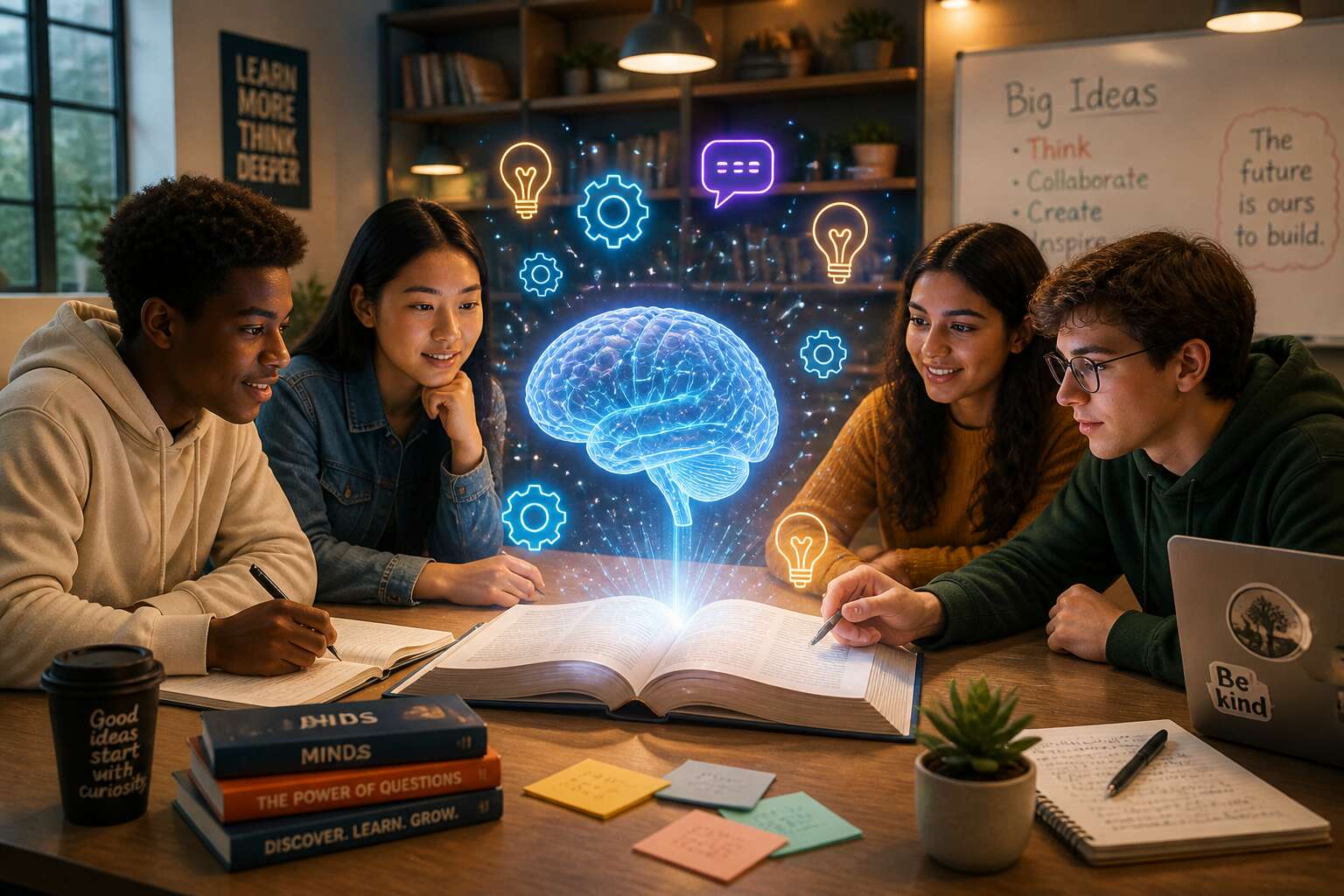
Understanding How Students Learn
The Science of Learning
Ebbinghaus observed that learners forget roughly 70% of new material within 24 hours, a finding that still anchors modern education psychology. Memory is not a faithful recorder; it is a reconstructive process shaped by attention and prior knowledge.
The science of learning moves beyond rote repetition. Within a single day, without strategic revisits, the brain prunes weak synaptic connections. Spacing practice sessions and interleaving topics produce more durable retrieval pathways.
- Learning is context dependent, so shifting environments strengthens recall.
- Errors, when framed constructively, consolidate understanding.
Education psychology also examines motivation and self-regulation. South African learners enter classrooms with diverse linguistic and cultural schemas, which directly influence how they encode information. Recognising these variables helps educators build instruction that aligns with the brain’s natural architecture.
Cognitive Processes
Learners hold only four ideas in working memory at once, yet many lessons demand ten. That gap explains why attention drifts. I have watched students nod along, only to stare back blankly moments later! Instruction succeeds when it respects these constraints.
Teachers chunk material into manageable pieces and sequence questions to match processing capacity. Metacognition matters too. Students who assess their own readiness often predict success inaccurately, a useful clue for formative assessment.
Core cognitive processes include:
- Attention, selecting what enters the mind.
- Working memory, briefly holding that information.
- Encoding, transferring it into long-term storage.
- Retrieval, rebuilding it on demand.
These processes explain forgetfulness and the power of practice. In South Africa, multilingual classrooms increase cognitive load. Education psychology helps educators perceive that load and adapt their methods.
Motivation and Engagement
A learner can process every piece of information correctly and still learn nothing. Motivation determines whether cognitive resources ever get used. Education psychology frames this distinction through intrinsic drive versus external pressure. I have seen classrooms where students complete every task on time, yet absorb none of the content!
In South African classrooms, overcrowding and resource scarcity strain daily instruction. Self-determination theory identifies autonomy, competence, and relatedness as core psychological needs. When those needs collapse, disengagement follows quickly.
- Autonomy gives learners meaningful choice.
- Competence comes from challenging, achievable tasks.
- Relatedness grows through genuine teacher connection.
Quiet withdrawal and performative compliance both signal motivation failures, not cognitive ones. Recognising that difference is where education psychology becomes a practical tool for every teacher.
Individual Differences
The correlation between a neatly completed workbook and actual understanding is often weak. In South Africa, where class sizes can exceed forty learners, the pressure to standardise instruction is immense. Yet a child’s working memory, processing speed, and prior knowledge base create distinct cognitive profiles. Two learners can read the same paragraph and extract entirely different meanings.
Education psychology demonstrates that learning differences are not deficits. A learner with strong verbal skills but weak spatial reasoning will struggle with geometry, not intelligence. Another might excel at procedural tasks but fail at abstract transfer. The teacher who recognises this separates effective instruction from mere content delivery.
Common variations in how learners process information include:
– Preference for visual diagrams over written text.
– Need for verbal rehearsal to anchor new concepts.
– Reliance on step-by-step logical sequencing.
– Capacity for holistic pattern recognition.
These differences demand differentiated assessment, not just differentiated teaching. A single test format will always favour a specific cognitive style. Education psychology pushes the practitioner to observe how a learner arrives at an answer, not just whether the answer is correct. I have watched a quiet learner solve problems through drawing, a method that revealed competence a written test would have missed entirely.
Key Theoretical Perspectives
Behaviorism in the Classroom
The classroom is full of observable acts. Behaviourism, a central theory of education psychology, locates learning not in the mind’s unseen depths, but in the visible arc of action and consequence. In South African schools, teachers become careful operators of this process. I have seen a nod of approval, a stern gaze, a small prize; each gesture writes a rule upon a child’s future conduct. Yet the precision required is unforgiving. Mistimed praise or a delayed punishment can unravel the pattern, leaving learners adrift in confusion rather than guided by clarity!
Reinforcement schedules come in several forms:
- Fixed ratios deliver a steady result after a set number of responses.
- Variable ratios produce the thrill of unpredictability.
- Continuous reinforcement builds rapid, fragile habits.
Behaviourism cannot read the grief or joy behind a student’s silence. It measures the outer form, never the inner wait. That blindness is its quiet sorrow.
Cognitive Constructivism
A child’s error can be evidence. In cognitive constructivism, learning involves active reordering of mental frameworks rather than the transfer of facts. Learners test new ideas against prior knowledge, reshaping what they know when reality resists.
This perspective demands patience from teachers. A wrong answer often reveals the learner’s current model, and that model deserves examination! Education psychology teaches us to see mistakes as data, not failures. Understanding how children build meaning changes what we notice in a classroom.
- Learners construct meaning through experience and reflection
- Cognitive conflict triggers deeper understanding
- Social interaction scaffolds individual discovery
When a South African classroom embraces this, the teacher becomes a guide who asks questions rather than supplies answers. Education psychology reminds us that learning is a process of construction, not storage.
Social Learning Theory
A single observation can alter a child’s next move. Social Learning Theory places education psychology at the heart of everyday classroom interaction. Instead of punishment or reward alone, learners copy what they see!
Albert Bandura showed that children imitate models without any incentive. The Bobo doll study proved that aggression spreads through observation alone. But the same mechanism works for kindness, curiosity, and persistence.
In South Africa, where classes are crowded and resources are thin, modeling becomes a tool. A teacher who reads with enthusiasm creates readers.
Consider these elements of observational learning:
- Attention: the learner must notice the model
- Retention: the learner must remember the action
- Reproduction: the learner must practice the skill
- Motivation: the learner must want to repeat it
Every glance, every intonation, every response to a wrong answer teaches something. Education psychology calls this the hidden curriculum. I have seen it reshape an entire classroom.
Humanistic Approaches
Humanistic approaches in education psychology shift the focus from behavior to the whole person. Carl Rogers argued that a safe classroom allows genuine learning. Maslow’s hierarchy reminds us that hunger or fear blocks curiosity. In South Africa, a child who has not eaten cannot attend to algebra. If we ignore those needs, no textbook helps.
Consider what a learner requires to engage:
- A sense of belonging
- Freedom from humiliation
- A teacher who listens without judgment
These are conditions for growth. Education psychology, viewed this way, becomes an act of justice. When we respect each pupil’s inner world, we create spaces where thought can happen. I have watched a quiet learner speak once trust was established. That is the humanistic promise.
Developmental Theories
Education psychology too often ignores the learner’s age. Developmental theories argue that age shapes what is possible. Erik Erikson observed that each stage demands a struggle. In South Africa, a teenager grappling with identity cannot separate that fight from fractions. This is not a distraction; it is the curriculum.
Consider the stages that gate learning:
- Trust versus mistrust, from infancy
- Industry versus inferiority, during school years
- Identity versus role confusion, in adolescence
When a stage is unresolved, no worksheet can bypass it. The lesson must pair with the learner’s stage, or it will dissolve.
Practical Applications for Teachers
Designing Effective Lesson Plans
Students forget roughly 70% of new information within 24 hours! Education psychology converts this unavoidable reality into practical lesson design choices. For example, interleaving practice, or mixing problem types within one session, beats blocking for long term retention, yet most textbooks group by skill. Another principle involves formative feedback loops. Short, low stakes checks embedded mid lesson give you real time data, but only if you act on them right away.
- Open with a 3 minute retrieval warm up.
- Introduce one new concept with two worked examples.
- Pause for a pair share and troubleshoot errors.
- End with an exit ticket that asks for a specific misconception.
This approach turns education psychology into daily practice without adding hours of prep. The lesson flexes based on what students actually write down.
Assessment and Feedback Strategies
Assessment rarely explains what to do next. In education psychology, feedback drives growth. One South African teacher told me that marking every error only produced anxiety, not improvement. She switched to two stars and a wish, focusing on strengths and one target. Learners responded better because the message was clear.
Formative assessment works when it shapes the next lesson. Quick checks, thumbs signals, or mini whiteboards reveal confusion instantly. The key is adapting on the spot.
- Ask one question that separates the concept from a common misconception.
- Collect responses anonymously, then discuss the range.
- Use the data to adjust your teaching sequence.
That feedback loop is where education psychology meets daily practice. It turns learner responses into deliberate action, without grading everything!
Classroom Management Techniques
Children feel a teacher’s state of mind before they hear a single instruction. Education psychology reminds us that behaviour is communication, not defiance. When a learner disrupts, they are often signalling overload, boredom, or a need for connection. One teacher in Soweto told me she stopped asking “What’s wrong with you?” and started asking “What do you need?” That question reshaped how she managed the room.
The physical space also manages behaviour. Desk arrangements facing the board, clear pathways, and tidy zones reduce conflict before it begins. These are environmental decisions rooted in education psychology.
Some routines anchor the whole class:
– One voice at a time
– Materials ready before instruction
– A calm, visible signal for transitions
Each step removes a small piece of confusion. A teacher who spots the first sign of restlessness and adjusts pace, position, or tone is practising management as observation. That is the quiet work behind every settled classroom.
Creating an Inclusive Environment
Inclusion is not a seating plan. Education psychology shows that a learner who feels unseen will find ways to be noticed, often through disruption or withdrawal. A teacher in Durban told me she rearranged her groups based on strengths, not marks. Within weeks, the quietest child started speaking.
The practical applications are quiet and deliberate. Teachers who build inclusive environments do small things consistently:
- Rotate classroom roles weekly
- Greet each learner personally at the door
- Choose texts and examples from the learners’ own realities
These moves lower anxiety and signal belonging. Yet an inclusive room also watches who speaks. Track patterns of participation. Interrupt the silence of the same voices and make room for the rest.
Using Educational Technology
Reliable internet reaches fewer than half of South African schools. Yet education psychology shows that digital tools work best when learners use them to watch themselves learn.
Progress dashboards, habit trackers, and self-marking quizzes create a visible record. A learner sees their attempt count rise or their response time slow. That observation does the teaching. I have watched learners sit up when a graph shows their own effort. The teacher’s role shifts from managing screens to guiding what learners notice.
- Learners who review their own analytics show more persistence
- Progress-over-time displays support self-correction
- Weekly one-sentence reflections help learners articulate their own patterns
These small digital habits change the classroom dynamic. The learner stops performing for the teacher and starts reading their own work.
Supporting Students with Special Needs
Half of my lesson on fractions disappeared into a learner’s desk drawer last Thursday, which is how I learned that paper worksheets and learners with ADHD have a fraught relationship. This is where education psychology earns its keep. The discipline asks teachers to consider what the learner’s environment does to their attention, not just what the learner does with their attention. For special needs support, this shifts the job from coaxing compliance to designing conditions for success.
Instead of insisting a learner with dysgraphia write full answers, I supply a laptop and ask for three words. Instead of a full worksheet, I give five problems. The learner with autism receives a visual schedule of the lesson’s exact order, so uncertainty does not drain their cognitive load. These adjustments cost nothing. They are simply education psychology applied with foresight.
One learner with auditory processing delays could not follow instructions given verbally. I typed them, printed them, and set visual flags at his desk. He finished the task with no prompting. The most effective support is often the least dramatic: remove the obstacle, keep the expectation, and watch the learner do the rest.
The Role of the Educational Psychologist
Assessment and Diagnosis
South Africa’s classrooms hold many hidden struggles. A child who seems lazy may have an undiagnosed auditory processing disorder. The educational psychologist steps in to perform assessment and diagnosis, two essential processes for effective support.
Assessment gathers evidence through several channels:
- Cognitive tests that measure memory, attention, and reasoning.
- Behavioral checklists completed by teachers and parents.
- Direct observation in the classroom environment.
Diagnosis interprets that evidence with clinical rigor. This process separates temporary difficulties from persistent conditions. It also reveals environmental factors, such as trauma or poverty, that mimic learning disabilities. Education psychology turns ambiguous symptoms into actionable understanding. Without this work, teachers guess, parents worry, and learners lose years. With it, interventions target the actual problem. The psychologist’s findings shape individualized plans, classroom accommodations, and family guidance. In a country where resources are scarce, precise diagnosis prevents wasted effort. It is a necessity, though the system often undervalues it.
Intervention Programs
After the diagnosis, the work truly begins. The educational psychologist transforms clinical findings into lived change through meticulously crafted intervention programs. These are not generic worksheets or one-size-fits-all strategies. They are bespoke roadmaps, designed for a specific child within a specific South African context, accounting for the resources of their home and the realities of their classroom.
Intervention is transactional. It is a collaboration between the psychologist, the teacher, and the parent, each playing a distinct part in the learner’s rehabilitation.
1. Capacity building for teachers, translating complex reports into practical classroom tactics.
2. Structured therapeutic sessions with the child, focusing on self-regulation and metacognition.
3. Parent coaching to align home environments with the school’s new strategies.
The psychologist monitors progress against precise baselines, adjusting the programs as the child evolves. This is where the quiet promise of education psychology finds its strongest voice. It moves the conversation from what is wrong to what can be built. It is the architecture of a second chance, ensuring that a vulnerable learner does not just survive the system, but finds a way to thrive within it.
Collaboration with Educators
Educational psychologists do not work in isolation. The classroom is where learning struggles surface daily, and teachers are the first witnesses. A psychologist who remains confined to an office misses the full picture of a child’s daily reality. Collaboration with educators is the foundation of effective education psychology.
Effective collaboration takes several forms:
- Joint problem solving sessions where teachers share observed patterns
- Co-designing accommodations that fit the actual classroom flow
- Regular feedback loops that keep strategies responsive to daily realities
Teachers hold data that no assessment can capture. Psychologists bring diagnostic frameworks and developmental knowledge. Together they interpret behaviour with more nuance than either could alone. This relationship turns reports into daily practice.
Research and Evidence-Based Practice
Education psychology rests on a simple professional obligation: using what has been proven to work, not fashion or intuition. The educational psychologist reads peer reviewed studies, tests their relevance, and adapts them to the realities of South African classrooms, where resources vary and context matters.
Evidence based practice demands three things:
- The research base exists for this specific problem.
- The intervention fits this particular child and setting.
- Outcomes are measured and reviewed honestly.
When an intervention fails, the research offers alternatives. The psychologist returns to the data instead of defending a comfortable assumption.
Challenges and Future Directions
Addressing Learning Gaps
In South Africa, almost eight in ten Grade 4 learners cannot read for meaning, according to the latest PIRLS study. That number quantifies the depth of learning gaps.
Addressing these gaps requires education psychology to adjust its focus. The old emphasis on individual deficits must yield to systemic, contextual understanding. We must weigh the reality of load shedding, food insecurity, and shifting language policies! These factors alter cognitive load and memory retention in ways standardised tests cannot capture.
Future directions will likely include:
- Creating flexible diagnostic tools that adapt to multilingual realities.
- Embedding psychological support within teacher coaching, not separate sessions.
- Advocating for policy that funds early intervention based on predictive analytics.
The next decade of education psychology must embrace this complexity. It cannot remain a sequestered discipline. Instead, it becomes an applied discipline, attentive to the uneven conditions of South African classrooms.
Mental Health in Schools
The mental health crisis in South African schools remains underreported. Load shedding disrupts routines, teacher burnout goes unacknowledged, and learners arrive carrying trauma from community violence. Education psychology must move from isolated clinic rooms into the unpredictable flow of school life.
Future directions demand systemic change. We need school-based models that embed psychological support into timetables. Research shows teacher wellbeing predicts learner outcomes more strongly than most interventions. Yet funding prioritises crisis response over prevention. Flip that priority! Without addressing staff mental health, learner support stays theoretical.
The Impact of Digital Media
Screen time disrupts South African classrooms. A 2023 study found that 67% of teens admit to doomscrolling during lessons. This pattern demands urgent attention.
The challenges are real:
- Attention fragmentation erodes deep learning.
- Cyberbullying spills into classrooms with no digital protocol.
- Data poverty widens gaps between connected and disconnected learners.
Future directions should design digital resilience programmes based on evidence. Teachers need training to spot tech related trauma. We must stop viewing screens as purely positive or negative. Instead, we need context aware strategies that use digital tools while protecting mental health. The classroom is now a hybrid space. Education psychology should lead this shift, not lag behind it.
Culturally Responsive Teaching
South African classrooms carry a multiplicity of languages and traditions, yet teaching often defaults to a single cultural lens. Education psychology shows that when learners see themselves in the curriculum, engagement deepens. The challenge lies in translating this insight into daily practice. Teachers must navigate contested histories, socio economic divides, and subtle biases embedded in textbooks. Future directions demand collaborative curriculum design with communities, not merely for them. Consider these priorities:
- Co construct lesson content with parents and elders
- Assess cultural relevance through learner feedback loops
- Train educators to recognise microaggressions
Without such shifts, culturally responsive teaching remains a slogan. The field can provide the evidence base, but implementation requires honest dialogue about power and identity.
Lifelong Learning and Adult Education
In my experience, adult education often fails when it applies primary school methods to mature learners. Their habits, shaped by employment and family duties, resist the standard models used in childhood instruction. Education psychology reveals that adults need relevance and autonomy, not rote drills.
The challenges are structural. Timetables ignore shift work. Assessment privileges speed over reflection. Many facilitators lack training in andragogy, the art of guiding self directed learners.
Future directions demand institutional humility. Recognition of prior learning, micro credentials, and digital platforms for rural communities appear promising. Systemic shifts also matter:
- Learner history mapping before curriculum design
- Feedback systems co created with employers
- Mentorship networks funded across provinces