
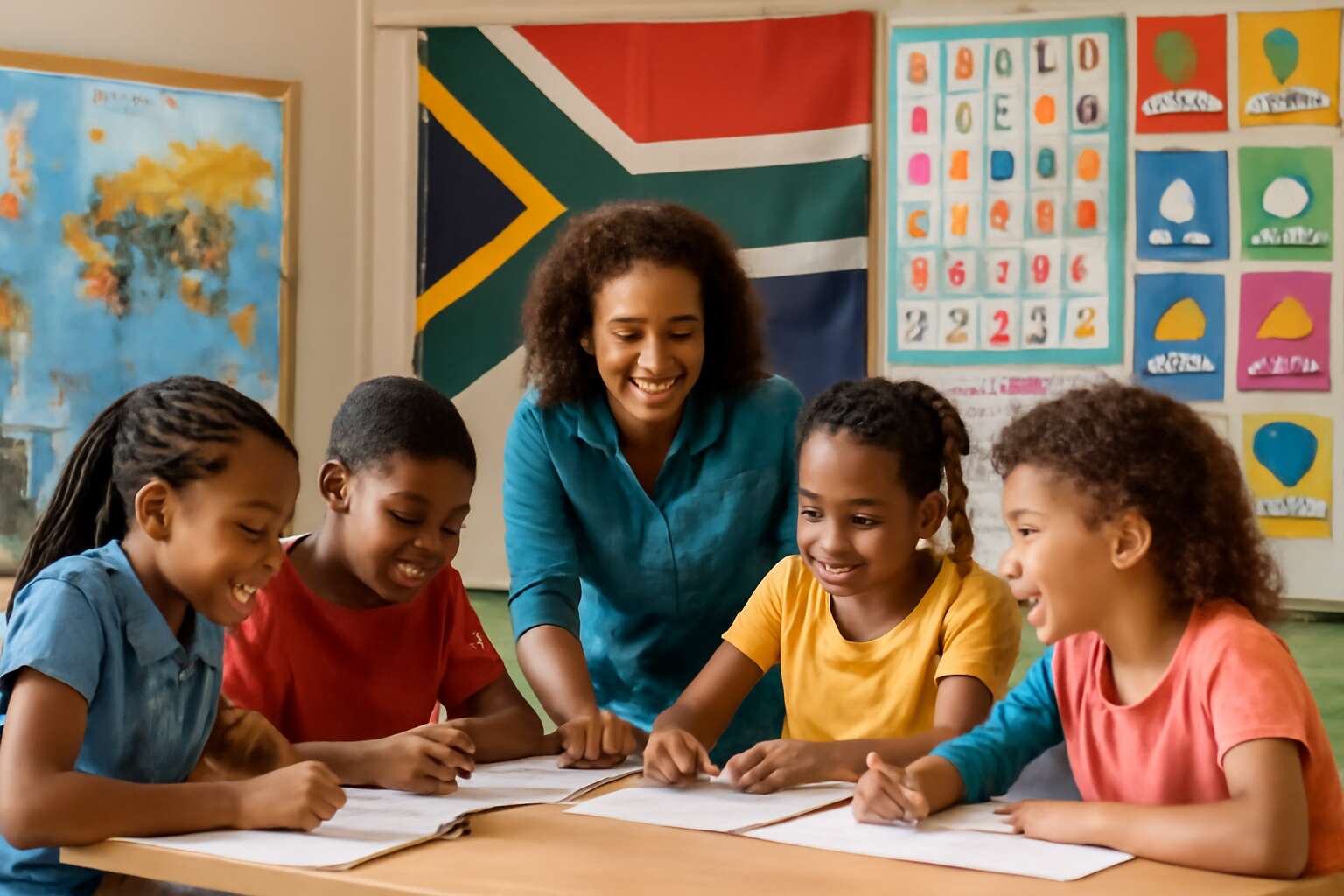
Overview of the South Africa Department of Education
History and Development – Historical background and evolution of the department
South Africa’s Department of Education has a history as tumultuous as a soap opera, yet it has played a pivotal role in shaping the nation’s future. Established in the early 20th century, the department’s evolution mirrors South Africa’s complex socio-political landscape—marked by periods of transformation, resistance, and renewal. From the apartheid era’s rigid segregation to post-apartheid efforts to promote inclusive education, the department has constantly adapted to the country’s changing needs.
Over the decades, the south africa department of education has undergone significant reforms, aiming to bridge the educational divide. Its development can be traced through key phases, including:
- The introduction of the Bantu Education system during apartheid—an infamous chapter in history that highlighted inequality.
- The transition to a democratic government in 1994, which spurred widespread reforms aimed at fostering equity and access.
- Recent initiatives focused on digital transformation and curriculum modernization, ensuring South Africa remains competitive in a globalized world.
- Promoting equitable access to quality education for all South Africans.
- Modernizing curricula to align with global standards and technological advancements.
- Driving digital transformation efforts to make learning more accessible and engaging.
- Policy and Planning
- Curriculum and Assessment
- Quality Assurance and Monitoring
- Research and Development
- Increasing school facilities in rural areas
- Implementing e-learning platforms
- Training educators for modern pedagogies
- The rollout of e-learning platforms accessible nationwide
- Teacher training programs focused on digital pedagogy
- Partnerships with tech companies to enhance educational tools
- Government-funded scholarships for postgraduate study
- Private sector partnerships offering industry-specific bursaries
- International scholarships facilitated through government agreements
- Fostering inclusive environments that accommodate learners with disabilities.
- Ensuring equitable distribution of resources across provinces.
- Implementing targeted programs to uplift underprivileged communities.
- comprehensive framework
- that integrates community participation and stakeholder collaboration
- Enhancing teacher qualification standards through targeted training initiatives.
- Offering competitive remuneration and career progression opportunities to retain talent.
- Implementing mentorship programs to nurture novice teachers and reduce burnout.
- Investing in ICT infrastructure to expand digital access
- Renovating dilapidated school buildings
- Providing affordable devices and internet connectivity to underserved communities
- Enhanced teacher training programs
- Curriculum updates aligned with digital learning
- Robust assessment frameworks
- Form strategic alliances with local and international partners.
- Facilitate stakeholder engagement forums to align goals.
- Leverage private sector innovation to modernize curriculum delivery.
- Ensure community voices are included in policymaking processes.
- Secure funding through collaborative ventures that support rural and urban schools equally.
- Visit the official South Africa Department of Education website.
- Navigate to the ‘Contact Us’ section—usually found at the bottom of the homepage.
- Choose your preferred method of communication—be it email, phone, or online inquiry forms.
- Check the news and updates section regularly for the latest policies, reforms, and funding opportunities.
- interactive FAQ section
- step-by-step application guides
- feedback system
- reporting platform
- public consultation forums
Mandate and Core Functions – Primary responsibilities and objectives
The South Africa Department of Education stands as the cornerstone of the nation’s pursuit of knowledge and societal transformation. Its core mandate is to provide accessible, equitable, and quality education across all levels—an ambitious endeavor in a country marked by profound historical disparities. With a focus on fostering inclusive learning environments, the department aims to bridge gaps that persist from South Africa’s tumultuous past.
At the heart of its responsibilities lies the development and implementation of policies that shape the educational landscape. These include curriculum reform, teacher training, and infrastructural investments—each vital for nurturing a future-ready populace. To ensure these objectives are met, the department orchestrates a range of initiatives, from early childhood development programs to higher education support.
Among its strategic priorities are:
In this complex tapestry of goals, the south africa department of education continually navigates the delicate balance between tradition and innovation, aiming to cultivate an educated citizenry capable of steering the nation toward a brighter future.
Organizational Structure – Key divisions and leadership hierarchy
The South Africa Department of Education boasts a meticulously structured hierarchy designed to steer the nation’s educational journey with precision and purpose. At its apex stands the Minister of Education, a visionary leader guiding the department’s overarching policies and strategic initiatives. Just below, a dedicated team of deputy ministers and senior officials ensure that each division functions seamlessly, translating policy into impactful action.
The department is organized into several key divisions, each specializing in vital facets of education. These include Curriculum Development, Teacher Training, Infrastructure and Resources, and Higher Education. Each division operates with a clear mandate to elevate standards and foster innovation, ensuring that South Africa’s educational landscape remains dynamic and inclusive. To facilitate smooth coordination, the department employs a layered hierarchy of directors and managers, all committed to realizing the department’s core objectives.
This robust organizational structure empowers the south africa department of education to adapt swiftly to evolving needs and technological advancements, fueling the country’s pursuit of accessible, equitable, and high-quality education for every learner.
Educational Policies and Reforms in South Africa
Key Policies – Major educational policies implemented over the years
South Africa’s education scene isn’t exactly a walk in the park, but it’s certainly a rollercoaster of policy reforms aimed at transforming a historically unequal system. Over the years, the south africa department of education has rolled out initiatives that attempt to bridge gaps, uplift communities, and sometimes, just keep the wheels turning. One of the most significant milestones was the implementation of the **Curriculum 2005**, a bold attempt to overhaul the teaching framework with outcomes-based education. While it faced its fair share of criticism, it set the stage for subsequent reforms.
Fast forward, the department launched the **National Development Plan (NDP) 2030**, emphasizing equitable quality education as a pillar for national progress. In recent years, policies such as the **Foundational Learning Competencies** initiative have sought to ensure that children leave Grade 3 with reading, writing, and numeracy skills—because a literate nation is a resilient nation. The south africa department of education also introduced the **School Food and Nutrition Programme**, highlighting that a well-fed student is a learning-ready student. These policies, layered with a dash of political will and community input, continue to shape South Africa’s educational landscape.
Reform Initiatives – Recent reforms focused on improving access and quality
South Africa’s education reform landscape is a testament to resilience and relentless pursuit of equity. Recent reforms aim to bridge entrenched disparities, recognizing that quality education is the bedrock of societal transformation. The south africa department of education, aware of these imperatives, has embarked on a journey to reimagine how learning unfolds in diverse communities.
One notable initiative is the integration of the **Foundational Learning Competencies** program, designed to ensure every child leaves Grade 3 with essential reading, writing, and numeracy skills. This shift underscores an urgent moral imperative: no child should be left behind in the shadow of systemic inequality. Additionally, the department introduced the **School Food and Nutrition Programme** to combat hunger and foster an environment conducive to learning. These reforms are not merely policies but reflections of a collective moral consciousness that recognizes education as a catalyst for social mobility.
In recent years, the south africa department of education has also prioritized expanding access through infrastructure development and digital integration.
These measures aim to dismantle barriers and create a more inclusive system. The continuous evolution of policies embodies an enduring hope that every student, regardless of background, can access the transformative power of education—an unyielding belief woven into the very fabric of South Africa’s educational reforms.
Policy Impact – Analysis of policy effectiveness and ongoing challenges
The impact of educational policies in South Africa often teeters on the fine line between hopeful innovation and stubborn systemic hurdles. While the south africa department of education has rolled out ambitious reforms, the journey toward true educational equity remains a complex labyrinth. Recent policy initiatives, such as the Foundational Learning Competencies program, have shown promising results—yet, challenges persist in ensuring uniform implementation across diverse regions.
Effectiveness varies markedly depending on local resources, community engagement, and educator training. To illustrate, infrastructure development in rural schools has improved access but often struggles against bureaucratic delays and inconsistent funding. Meanwhile, digital integration and e-learning platforms are transforming classrooms, but digital divides threaten to deepen the chasm between urban and rural learners.
Ongoing evaluations reveal a nuanced picture: some policies foster genuine progress, while others require recalibration. For instance, the School Food and Nutrition Programme has significantly reduced hunger-related absenteeism, yet logistical hurdles still hamper nationwide reach. As the south africa department of education continues to refine its approach, the key lies in balancing policy ambition with pragmatic execution—an ongoing dance that underscores both resilience and the need for relentless adaptation.
Major Education Programs and Initiatives
Curriculum Development – Curriculum updates and digital learning initiatives
The South Africa Department of Education is continuously evolving its major education programs and initiatives to meet the demands of a changing world. One of the most significant efforts has been in curriculum development, where updates aim to make learning more relevant and engaging for students across diverse backgrounds. These curriculum reforms emphasize critical thinking, creativity, and digital literacy, ensuring South African learners are equipped for the future.
Digital learning initiatives are at the forefront of these advancements. The department has launched programs to integrate technology into classrooms, providing access to laptops, tablets, and online resources. This shift not only bridges the educational gap but also fosters a more inclusive environment where rural and underserved communities can thrive. To better understand these efforts, consider the following key initiatives:
Through these programs, the South Africa Department of Education aims to create a dynamic and adaptable learning landscape—one that recognizes the importance of digital fluency and lifelong learning in the 21st century. These initiatives underscore a commitment to ensuring every student has the opportunity to succeed, regardless of their circumstances.
Matriculation and Higher Education – Programs supporting university access and quality
The South Africa Department of Education has long recognized that access to quality higher education is vital for building a prosperous future. Aiming to widen opportunities, it has introduced major programs to support matriculation and university access for students from all walks of life. These initiatives are designed not only to remove barriers but also to elevate the standards of higher education across the nation.
One of the standout efforts is the expansion of financial aid schemes and bursary programs, which help talented students from underserved communities pursue university studies without the heavy burden of debt. Additionally, the department has prioritized the development of foundational bridge programs that prepare students academically and socially for university life. To ensure that students are equipped for the competitive workforce, the South Africa department of education also emphasizes enhancing the quality of tertiary education through curriculum refinement and faculty development.
By fostering partnerships with universities and industry leaders, the department aims to create a seamless pathway from high school to higher education. These efforts are vital in cultivating a vibrant, inclusive academic landscape where every aspiring learner can thrive and contribute meaningfully to South Africa’s social and economic fabric.
Scholarships and Funding – Financial aid options for students
When it comes to unlocking the doors of higher education in South Africa, the department of education has rolled out some impressive financial aid options. These scholarships and funding initiatives are designed to make university accessible for talented students from all walks of life, especially those who might have otherwise been locked out by tuition fees and living costs. With a focus on inclusivity, the south africa department of education has created a safety net for those dreaming of a brighter future.
One of the most popular programs is the bursary scheme, which offers targeted funding for students based on academic merit, financial need, or both. These bursaries often cover tuition, accommodation, and even textbooks — talk about a full-package deal! To navigate this landscape, students should keep an eye on the application deadlines and eligibility criteria, which are regularly updated on the department’s official portal.
In addition to bursaries, the south africa department of education also champions a variety of scholarship programs aimed at fostering excellence in specific fields like science, technology, engineering, and mathematics. Here’s a quick overview of the key funding avenues:
Altogether, these initiatives demonstrate the department’s commitment to cultivating a skilled, diversified workforce. By investing in education funding, the south africa department of education isn’t just supporting individual students — it’s laying the groundwork for a more prosperous and equitable nation.
Accessibility and Inclusion in South African Education
Rural and Urban Disparities – Addressing educational inequalities
Access to quality education remains a cornerstone of South Africa’s development, yet disparities between rural and urban areas persist, casting long shadows over true inclusion. The south africa department of education has made strides in bridging these gaps, but challenges linger. In rural communities, learners often face limited infrastructure, scarce resources, and a shortage of qualified teachers, creating a formidable barrier to equitable learning opportunities.
Conversely, urban centers tend to benefit from better facilities and technological integration, yet even these areas are not immune to inequality. The south africa department of education recognizes that true access requires more than just physical infrastructure — it demands intentional policies that promote inclusivity. Initiatives such as mobile classrooms, community engagement programs, and digital learning platforms are pivotal in narrowing the divide.
By addressing these multifaceted challenges, the south africa department of education continues its pursuit of a more accessible and inclusive educational landscape, where every child, regardless of geographic or socio-economic barriers, can thrive. The journey is ongoing, but each step forward highlights the department’s unwavering commitment to educational equity in South Africa.
Support for Special Needs Learners – Inclusive education strategies
In South Africa, the pursuit of inclusive education is not merely a policy objective but a moral imperative embraced by the south africa department of education. Recognizing that learners with special needs deserve equitable opportunities, the department champions innovative strategies that foster accessibility and inclusion across diverse learning environments.
One of the most transformative approaches involves implementing tailored inclusive education strategies that accommodate learners with disabilities. These initiatives include sensory-friendly classrooms, assistive technologies, and specialized training for educators. Such measures ensure that every child, regardless of physical or cognitive challenges, can engage fully in the learning process.
Furthermore, the south africa department of education prioritizes the development of accessible infrastructure, such as ramps, tactile paving, and adapted learning materials. To streamline efforts, the department has adopted a
ensuring that inclusive education is not an isolated endeavor but a collective mission.
Through targeted programs and policy support, the department continues to break down barriers, making education a sanctuary of hope and possibility for all South African learners. Inclusive education is no longer just an ideal but a vibrant reality in the making, propelled by unwavering commitment and innovative foresight.
Language Policy and Multilingual Education – Language considerations in classrooms
South Africa’s multilingual tapestry is woven into the very fabric of its education system, reflecting the nation’s rich cultural diversity. The South Africa Department of Education recognizes that language is not merely a tool for communication but a bridge to inclusion and equity. By embedding multilingual education policies, the department ensures that learners from different linguistic backgrounds can access quality education in their home languages, fostering a sense of belonging and confidence in the classroom.
This commitment to language inclusivity is evident in initiatives that promote accessible and inclusive learning environments. Schools are increasingly adopting language policies that support code-switching, translation services, and the development of learning materials in multiple languages. The South Africa Department of Education also emphasizes the importance of training educators in multilingual pedagogy, enabling them to navigate diverse classrooms effectively. Such strategies are vital in breaking down language barriers and ensuring that no student is left behind due to linguistic differences.
Moreover, the department champions the integration of language considerations into broader accessibility efforts, recognizing that effective communication is fundamental to inclusive education. As South Africa continues to evolve as a nation, its education policies reflect a profound understanding—language is the key that unlocks the doors to equitable learning for all. This holistic approach underscores the department’s unwavering dedication to making education a truly collective and inclusive journey.
Challenges Facing the South Africa Department of Education
Funding and Resource Allocation – Budget constraints and resource distribution
In the sprawling tapestry of South Africa’s educational landscape, one thread remains unyielding—funding and resource allocation. Despite the department’s noble mission to nurture the nation’s brightest minds, it faces an ongoing struggle with budget constraints that threaten to fray this fabric of progress. Limited financial resources often mean that essential programs are underfunded, classrooms are overcrowded, and schools in disadvantaged areas lack vital learning tools.
Addressing these disparities requires not only strategic redistribution but also innovative approaches to resource management. The south africa department of education grapples with balancing urban and rural needs, where the disparity in access to quality education can feel like a chasm. To tackle this, the department employs a mixture of targeted grants, digital learning initiatives, and community-driven support systems. Nonetheless, persistent challenges in equitable resource distribution continue to cast shadows over the pursuit of educational excellence.
Teacher Training and Retention – Addressing shortages and professional development
In the vibrant corridors of South Africa’s educational system, one challenge persists with unwavering resilience: teacher training and retention. Despite ambitious policies aimed at uplifting the sector, shortages of qualified educators continue to cast a shadow over the pursuit of academic excellence. The south africa department of education faces a relentless quest to attract, develop, and retain passionate teachers amidst a landscape riddled with obstacles.
High attrition rates, especially in rural and underprivileged areas, threaten to erode the progress made. To combat this, the department has implemented innovative professional development programs designed to empower educators and foster lifelong learning. Yet, the demand outpaces supply, and many teachers find themselves overwhelmed by increasing class sizes and resource shortages. Addressing these issues requires a delicate balance of strategic incentives and supportive environments.
As the south africa department of education navigates these turbulent waters, the importance of investing in teacher capacity becomes more apparent than ever. Only through sustained effort and innovative solutions can the nation truly unlock its educational potential and inspire generations to come. The journey continues, demanding resilience and ingenuity at every turn.
Infrastructure and Technology – Improving school facilities and digital access
The stark reality of South Africa’s educational landscape reveals a pressing challenge: the infrastructure and digital divide threaten to undermine progress. Despite numerous reforms, many schools still grapple with dilapidated facilities and limited technology access. This digital gap is especially pronounced in rural areas, where outdated classrooms and scarce resources hinder learning outcomes. As the south africa department of education strives to bridge these disparities, the urgency to modernize school infrastructure becomes more evident than ever.
Addressing these issues requires innovative solutions—such as integrating digital learning platforms and upgrading physical facilities. To prioritize these efforts, the department has devised a series of strategic initiatives, including:
However, the scale of the challenge remains daunting. Improving school facilities and digital access is not merely a matter of funding; it involves a comprehensive approach that considers geographic, economic, and social complexities. The south africa department of education continues to grapple with resource allocation, aiming to deliver equitable quality education across diverse regions. Bridging the infrastructure and technology gap is essential—only then can South Africa unlock its true educational potential and inspire a new generation of learners.
Future Outlook and Strategic Goals
Digital Transformation – Integrating technology in education
As South Africa strides toward an era of digital enlightenment, the Department of Education envisions a future where technology seamlessly weaves into the fabric of learning. This digital transformation aims to bridge longstanding disparities, transforming classrooms into vibrant hubs of innovation. The department’s strategic goals include expanding access to digital tools, fostering digital literacy, and cultivating an environment where every learner can thrive in an interconnected world.
To realize this vision, the south africa department of education is deploying a comprehensive plan that emphasizes integrating technology into curricula and infrastructure. Initiatives such as providing tablets and high-speed internet to rural schools are pivotal steps. The department recognizes that technology is not merely a tool but a catalyst for empowering educators and learners alike.
In pursuit of these ambitions, the department’s focus on digital transformation is accompanied by a commitment to professional development. Teachers are being equipped with the skills necessary to navigate and utilize emerging technologies effectively. This holistic approach ensures that the future of education in South Africa is adaptable, inclusive, and resilient. As the landscape evolves, the south africa department of education remains steadfast in its mission to harness digital innovation for a brighter, more equitable educational future.
Quality Enhancement – Strategies to improve student outcomes
Looking ahead, the future of education in South Africa hinges on strategic aspirations that transcend mere access. The south africa department of education envisions a landscape where quality enhancement becomes a cornerstone of reform. Achieving this entails a comprehensive approach that targets improving student outcomes through innovative strategies tailored to diverse needs. One such strategy involves implementing data-driven assessments that inform targeted interventions, ensuring no learner is left behind.
To accelerate progress, the department emphasizes the importance of fostering an environment of continuous improvement. This is achieved through initiatives such as teacher mentorship programs and curriculum refinement that align with emerging societal demands. The goal is to cultivate resilient learners equipped with critical skills to navigate an interconnected world.
These pillars collectively underpin the department’s overarching mission—elevating the standard of education and closing disparities across South Africa’s diverse regions.
Partnerships and Collaboration – Engaging stakeholders for sustainable development
South Africa’s education landscape is at a pivotal crossroads, where the future hinges not just on classrooms filled with eager learners but on robust partnerships and collaborative efforts. The south africa department of education recognizes that sustainable development in education demands engaging a broad spectrum of stakeholders—from government agencies and civil society to private sector innovators and community leaders. It’s a joint effort that transforms policy into tangible progress.
Strategic goals for the department emphasize strengthening these alliances to foster innovation and resource sharing. To achieve this, the south africa department of education has championed a series of initiatives aimed at creating a cohesive ecosystem. These include community engagement programs, public-private partnerships, and international collaborations—all designed to pool expertise and funding for maximum impact.
By weaving together diverse voices, the department aims to build a resilient education system capable of adapting to societal shifts and technological advancements. After all, no single entity can carry the weight of educational reform alone. As the saying goes, “It takes a village,” and in South Africa’s case, it takes a nation united behind a common vision for educational excellence and equity.
How to Access Resources and Support from the Department of Education
Official Website and Contact Information – Where to find official updates and assistance
Accessing resources and support from the South Africa Department of Education official website is smoother than navigating a Pretoria traffic jam—thanks to its user-friendly layout. Whether you’re a parent, educator, or student seeking the latest updates, the digital portal is your one-stop shop for credible information. A quick visit to the site provides access to policy documents, curriculum updates, and digital learning initiatives that keep South African education evolving at a rapid pace.
Need official updates or assistance? The department’s contact information is prominently displayed, making it easy to reach out for help or clarification. For those who prefer a more structured approach, here’s a simple guide:
In an era where information is power, the South Africa Department of Education ensures that stakeholders can find official updates and assistance with ease—transforming what used to be a bureaucratic maze into a digital highway of support and transparency. Whether you’re hunting for scholarship info or seeking guidance on policy changes, the department’s online resources are your trusty compass in the vast landscape of South African education.
Applying for Scholarships and Grants – Guide to funding opportunities
Accessing resources and support from the South Africa Department of Education is an essential step for students and educators navigating the complex landscape of educational opportunities. One of the most effective ways to uncover funding options like scholarships and grants is through the department’s official channels. The digital portal provides a centralized hub where detailed information about available funding opportunities is regularly updated, ensuring stakeholders stay informed about new programs and deadlines.
Applying for scholarships and grants involves a few straightforward steps. First, visit the official South Africa Department of Education website and explore the dedicated funding section. Here, you will find comprehensive guides on eligibility criteria, application procedures, and required documentation. For added clarity, the site often features an
that simplify the process.
Some funding programs require applicants to submit online forms or email supporting documents directly through the department’s portal. Staying engaged with the news and updates section on the website can also reveal upcoming funding rounds or special initiatives designed to support students from diverse backgrounds. The South Africa department of education’s commitment to transparency ensures that every aspiring learner has a fair chance at securing financial aid, transforming the pursuit of education from a daunting challenge into an attainable goal.
Reporting and Feedback Channels – Engaging with the department effectively
Engaging with the South Africa Department of Education’s reporting and feedback channels is an essential step for anyone eager to access comprehensive resources and support. The department values transparency and open communication, recognizing that meaningful feedback from stakeholders drives continuous improvement. To connect effectively, stakeholders should familiarize themselves with the official website’s dedicated portals, where updates and avenues for dialogue are seamlessly integrated.
For those seeking direct support, the department offers multiple avenues of communication. These include online contact forms, dedicated email addresses, and dedicated helplines. Whether you wish to report concerns, seek clarification, or provide suggestions, these channels ensure your voice is heard. An organized
facilitates timely responses and fosters a collaborative approach to educational development in South Africa.
Active participation in the department’s feedback channels not only promotes transparency but also ensures that your needs and experiences contribute to shaping policies and resource allocation. The South Africa department of education remains committed to creating an inclusive and responsive educational environment, where stakeholders’ voices are integral to the ongoing evolution of the nation’s learning landscape.