
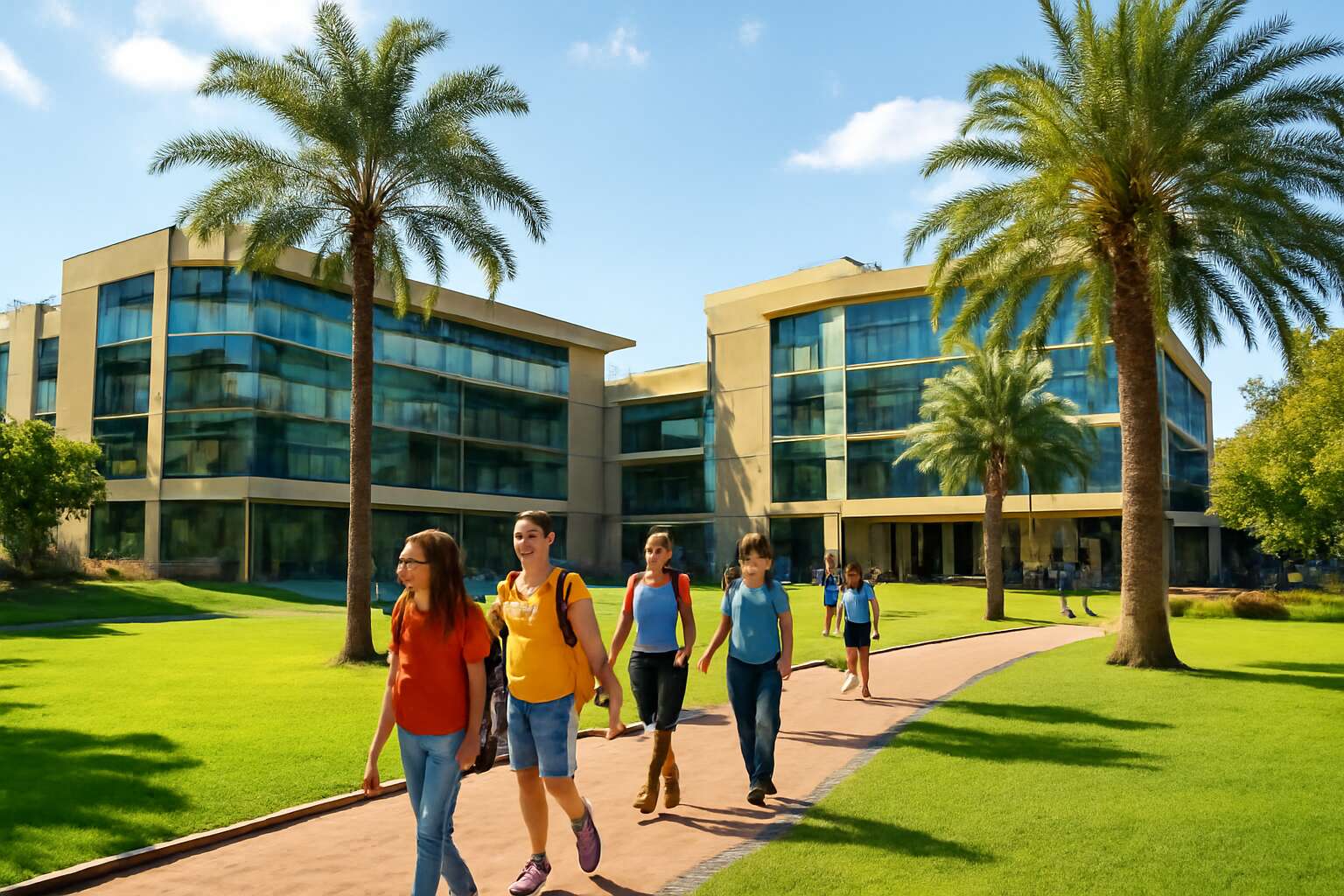
Overview of South Africa’s higher education landscape
Structure of South Africa’s higher education system
Nelson Mandela once said, “Education is the most powerful weapon which you can use to change the world,” and in South Africa, higher education institutions south africa carry that promise forward. The landscape blends storied public universities with nimble new providers, spanning research powerhouses to industry-focused campuses. Open distance options widen access, while private institutions add specialised routes that suit diverse pathways and budgets.
Within higher education institutions south africa, the system threads learning into four main streams, balancing inquiry with practical skill. Each stream helps learners move from curiosity to capability, crafting pathways that fit both rigorous scholarship and real-world application.
- Universities — research-intensive hubs offering bachelor’s, master’s, and doctoral programs
- Universities of Technology — applied sciences and industry-aligned diplomas
- Private higher education institutions — specialised programs and flexible delivery
- Open distance and e-learning providers — accessible learning across the country
Types of institutions in South Africa (universities, universities of technology, colleges)
South Africa’s education landscape is a lively, high-energy bazaar—hundreds of thousands of students chase knowledge across campuses and quiet corners of the internet. Within higher education institutions south africa, opportunity wears many hats: big research universities, nimble private providers, and open-distance options that defy geography. I’ve always thought the system is a genius blend of public backbone and private flex, designed to move learners from curiosity to credential with style.
- Universities — research-intensive hubs offering broad bachelor’s, master’s, and doctoral programs
- Universities of Technology — applied sciences and industry-aligned diplomas
- Colleges — practical, craft-focused pathways and local delivery networks
Open distance and private providers round out the tapestry, ensuring learners can tailor pace and budget. The result is a diverse spectrum that supports lifelong learning, from early curiosity to career-ready capability.
Regulatory bodies and quality assurance in SA higher education
From sunlit Cape Town to Gauteng’s plains, higher education institutions south africa glitter like a constellation of learning. It is a realm where halls echo with research breakthroughs and quiet libraries shelter determined minds; a system both ancient and suddenly futuristic. The landscape hums with living stories—students weaving curiosity into credentials, scholars pushing boundaries. It is an evolving epic of knowledge!
Integrated into this tapestry is a robust regulatory chorus that keeps the cadence true and the quality high:
- Department of Higher Education and Training (DHET)
- Council on Higher Education (CHE)
- South African Qualifications Authority (SAQA)
SAQA aligns qualifications with the National Qualifications Framework, ensuring portability across providers. CHE conducts programme-level quality assurance, while DHET shapes policy and access.
Current trends and challenges shaping SA higher education
Across higher education institutions south africa, the knowledge economy hums with ambition and resilience. From sunlit lecture halls to dim library basements, demand for credentials keeps rising, while institutions experiment with new delivery modes and partnerships.
Current trends shaping the sector include:
- Digital and blended learning expanding access and flexibility
- Targeted support for underrepresented students to boost retention
- Work-integrated learning and stronger industry ties
- Increased international collaboration and research partnerships
Yet challenges press on: funding volatility, infrastructure gaps, brain drain, and the need for robust articulation between degree and diploma pathways. Governance must stay agile to preserve quality while widening opportunity.
Types of higher education institutions in South Africa
Traditional universities and comprehensive institutions
“Education is the most powerful weapon you can use to change the world,” Mandela reminded us. In higher education institutions south africa, two core models shape the landscape: traditional universities that prize research and theory, and comprehensive institutions that blend academics with professional training. Both paths drive innovation, yet they match different student aims and career routes.
- Traditional universities: strong research culture and broad degree offerings
- Comprehensive institutions: professional, applied programs across disciplines
- Mobility: opportunities to transfer between paths or pursue joint programs
Choosing between them hinges on your goals, funding, and preferred pace of study!
Universities of Technology and applied sciences
Universities of Technology stand at the lively crossroads of theory and hands-on practice. They champion applied sciences, diploma routes, and work-integrated learning that tosses students into real projects from day one. In the realm of higher education institutions south africa, these campuses turn laboratory experiments into market-ready skills, shaping designers, technicians, and engineers who hit the ground running!
- Applied degrees and diplomas built with industry partners
- Co-op terms, internships, and project-based learning
- Facilities like makerspaces and simulation labs that mirror workplaces
Mobility remains a hallmark: students often progress from diploma to degree or join joint programs with traditional universities, keeping options broad and pathways flexible within higher education institutions south africa.
Technical and vocational education and training (TVET) colleges
In the frontline of practical education, TVET colleges in South Africa turn theory into tangible futures. In the realm of higher education institutions south africa, these campuses fuse workshops, machines, and imagination into market-ready skills. “You learn a trade by doing the trade,” a seasoned mentor likes to say, and those words echo through every drill and solder joint.
Programs span engineering technology, IT, and skilled trades, created with industry partners to stay relevant from day one. Learners pursue diplomas or certificates aligned with SETA standards, while apprenticeships bridge classroom learning with real workplaces.
Facilities mirror real workplaces, with workshops, simulators, and maker spaces that spark problem-solving. I’ve seen these labs ignite potential.
- Industry partnerships and apprenticeship pathways
- Hands-on labs and practical assessments
- Flexible delivery: day, evening, and part-time options
For many, TVET opens a ladder to further study and richer career mobility—a pragmatic route to skilled work and ongoing learning.
Specialised and research-focused institutions
Specialised and research-focused institutions in South Africa carve precise lanes of expertise. They concentrate resources on narrow fields—design, health sciences, agriculture, engineering, or fundamental research—delivering deep mastery and rigorous training. In the landscape of higher education institutions south africa, these campuses act as accelerators for graduates who push boundaries, not just fill classrooms. The outcome is targeted career paths and scholarship pipelines.
They typically offer:
- PhD and professional doctorates
- Masters by research
- Industry-aligned tracks at master’s and doctoral levels
- Cutting-edge labs, clinics, and field facilities
Graduates join academia, R&D labs, healthcare, design studios, or agricultural research, strengthening SA’s innovation ecosystem and keeping the country competitive on the world stage.
Quality assurance, accreditation, and rankings
Role of the Council on Higher Education and SAQA
Nelson Mandela once said, “Education is the most powerful weapon which you can use to change the world.” That truth resonates across higher education institutions south africa, where quality assurance, accreditation, and rankings are not mere formalisms but living commitments to relevance and integrity. The Council on Higher Education (CHE) and SAQA anchor this ecosystem, translating standards into practice and turning qualifications into widely recognized currency.
Key roles include:
- CHE oversees national quality assurance for programmes and providers, shaping accreditation decisions and public accountability.
- SAQA registers qualifications on the National Qualifications Framework (NQF) and ensures consistent recognition by employers and institutions.
- Together, they publish evaluative reports and profiles that illuminate performance, transparency, and the trust placed in higher education institutions south africa.
Ranking outcomes refine reputations, influence partnerships, and guide learners’ choices. For stakeholders in higher education institutions south africa, these mechanisms deliver continuity amid a rapidly shifting landscape.
Program accreditation and degree validation processes
“Education is the most powerful weapon which you can use to change the world,” Nelson Mandela reminds us—quality assurance shapes that weapon into real-world impact across higher education institutions south africa. In this landscape, quality assurance, accreditation, and rankings are not hollow rituals but living commitments to relevance and integrity that translate classrooms into trusted credentials and public trust.
Program accreditation and degree validation unfold as a shimmering sequence rather than red tape. The process centers on outcomes, curricula, and external scrutiny:
- Impact-focused evaluation of learning outcomes and graduate competencies
- Curriculum mapping, resource sufficiency, and staff qualifications
- External peer review and ongoing monitoring for continuous improvement
When successful, these mechanisms illuminate performance in evaluative reports and profiles, guiding learners and employers toward credentials that carry consistent currency across the sector.
International accreditation and global quality standards
Quality assurance is the passport the world recognizes, and for higher education institutions south africa it is not a gatekeeper but a compass. International accreditation and global quality standards transform ambition into outcomes, turning classrooms into credentials that travel confidently across borders and sectors!
Key dimensions include:
- Rigorous external peer reviews and ongoing monitoring
- Alignment with international qualification frameworks and currency in the job market
- Transparent performance profiles that employers can trust
In this ecosystem, credibility travels farther than a logo—and from my perspective, it reaches students, scholars, and communities with lasting impact!
Understanding rankings and what they signify for prospective students
“Quality is never an accident.” In higher education, quality assurance acts as a compass that helps students navigate the maze of choice. For higher education institutions south africa, accreditation and ongoing peer review translate ambition into portable credentials, keeping programmes current with international standards while responding to local needs. When transparency threads through performance profiles, graduates and employers alike read a map of consistency, rigor, and genuine impact.
- Foundation in program accreditation and ongoing peer review
- Alignment with international qualification frameworks and job-market currency
- Accessible performance data that employers and students can trust
From rankings, students glean three truths. These signals translate into tangible choices when selecting a programme, a campus culture, and a lifetime path.
Admissions, funding, and student support
Admission requirements across campuses and programs
Across higher education institutions south africa, admissions feel like stepping through doors to a future you can shape. A mentor once reminded me, “Education is the passport to the future,” and that promise colors every campus choice as applicants weigh programs that mix theory with real-world relevance.
Funding and admissions move together. Funding options include bursaries, university grants, and NSFAS support, with campus and program variations in deadlines and documentation.
Student support is the hinge that keeps journeys steady—academic advising, tutoring, language services, and counselling!
Admission requirements across campuses and programs often include certified transcripts and identity documents, plus language proficiency; some faculties require portfolios or entrance tests.
- Subject prerequisites
- Minimum grade requirements
- Documentation for funding
Financial aid, scholarships, and bursaries in SA
Across higher education institutions south africa, every doorway to a program is a whisper of what could be. Admissions feel like stepping through doors to a future you can shape, and a mentor’s reminder—”Education is the passport to the future”—glows at the entrance, coloring each campus choice with possibility.
Funding and admissions move together. Financial aid, scholarships, and bursaries arrive with campus- and program-specific deadlines and the documentation that follows.
- NSFAS support
- university bursaries and grants
- donor scholarships and department funds
Student support is the hinge that keeps journeys steady—academic advising, tutoring, language services, and counselling! These lifelines tailor themselves to each student’s path, turning challenges into catalysts and dreams into experience.
Student support services, mental health, and well-being
Education is the passport to the future! Admissions open the corridor to what you could become. Deadlines for funding keep pace with them. Across higher education institutions south africa, campuses invite you to shape a future—one program at a time.
Funding paths are varied and vital. They ride alongside admissions, not behind them, and they depend on campus and program specifics.
- Need-based awards
- Merit scholarships
- Emergency funds
Student support is the hinge that keeps journeys steady—academic advising, tutoring, language services, and counselling. These lifelines adapt to each path, turning challenges into catalysts. Mental health and well-being services sit at the heart of campus life, with confidential counselling and stress support.
Online learning and distance education options in South Africa
“Education is the most powerful weapon which you can use to change the world.” Across higher education institutions south africa, admissions are evolving—online applications, flexible starts, and clearer pathways!
Funding travels with admissions, offering options that fit programs and budgets. Scholarships and funding avenues align with campus realities, keeping momentum from enrolment to graduation across higher education institutions south africa.
Student support is the hinge—academic advising, tutoring, language services, and confidential counselling—available on campus or online, ensuring mental health and well-being stay central to every journey.
Online learning and distance education options offer robust virtual classrooms, blended programmes, and flexible delivery that fit busy lives across South Africa—across higher education institutions south africa.
- Asynchronous modules you can tackle on your schedule
- Mobile-friendly platforms for study on the go
- Credit recognition and smooth transfer between campuses
Global engagement, employability, and research in SA higher education
Industry partnerships and work-integrated learning opportunities
Global engagement deepens the weave between campuses and the wider world, infusing curriculums with international case studies and cross-border research. Higher education’s promise in South Africa rests on bold collaborations that turn ideas into impact. For many, higher education institutions south africa are diverse engines of discovery and opportunity!
Employability emerges when learning is anchored in work realities and industry needs. Work-integrated learning opportunities create bridges from classroom to career, blending theory with practice in meaningful ways.
- Industry partnerships that co-create curricula and capstone projects
- Work-integrated learning placements, internships, and mentor programs
- Joint research centers, innovation hubs, and international collaborations
Research thrives when universities wield global networks, drawing on diverse funders and sector partners to advance scalable solutions for society!
Graduate employability statistics and outcomes
Global engagement isn’t a bonus feature—it’s the engine behind higher education institutions south africa. When curricula sip from international case studies and cross-border research, graduates exit with sharper problem-solving and global readiness. Studies show graduate employability can rise by up to 30% for programs that weave global perspectives into core learning. That global lens also helps campuses attract diverse funders and partners, fueling richer learning ecosystems.
Global engagement translates into tangible outcomes:
- International co-authored research and joint funding
- Global internship networks and mentorship programs
- Shared curricula and cross-border accreditation
On the research front, universities weave global networks into solutions that scale beyond borders, addressing climate, health, and innovation in ways that benefit communities at home and abroad.
Research funding and collaboration across institutions
Global engagement isn’t a luxury; it’s the engine powering higher education institutions south africa. From rural towns to urban campuses, curricula draw on international case studies, sharpening graduates’ problem-solving and global readiness. When borders blur in labs and lecture halls, learning becomes urgent, relevant, and deeply human.
That global lens translates into tangible outcomes on every campus:
- International co-authored research and joint funding
- Global internship networks and mentorship programs
- Shared curricula and cross-border accreditation
On the research front, universities weave global networks into solutions that scale beyond borders, addressing climate, health, and innovation in ways that uplift communities at home and abroad.
Across institutions, research funding and collaboration feed ambitious projects—from climate resilience to health breakthroughs—while apprenticeships and joint PhD programs anchor South Africa’s place in a broader knowledge economy. higher education institutions south africa
International collaboration, student mobility, and exchange programs
Across higher education institutions south africa, more than 60% of graduates with international exposure report stronger employability and quicker progression into meaningful roles. Global engagement on campus isn’t a luxury; it’s the engine that sharpens problem-solving, cultural fluency, and human empathy across disciplines.
International collaboration, student mobility, and exchange programs fuse research with real-world impact. We see these exchanges turning classroom theory into field-ready practice. These pathways knit campuses to global laboratories, clinics, and creative hubs, expanding networks for co-authored projects, joint funding, and cross-border learning that benefits communities at home and abroad.
- Global internship networks that place learners in multinational settings
- Exchange programs that rotate perspectives between SA and partner institutions
- Joint PhD and master’s cohorts that sustain continuous knowledge exchange
The result is research that scales, education that mirrors in-demand skills, and graduates who navigate borders with confidence—an evolving tapestry that powers South Africa’s knowledge economy.