
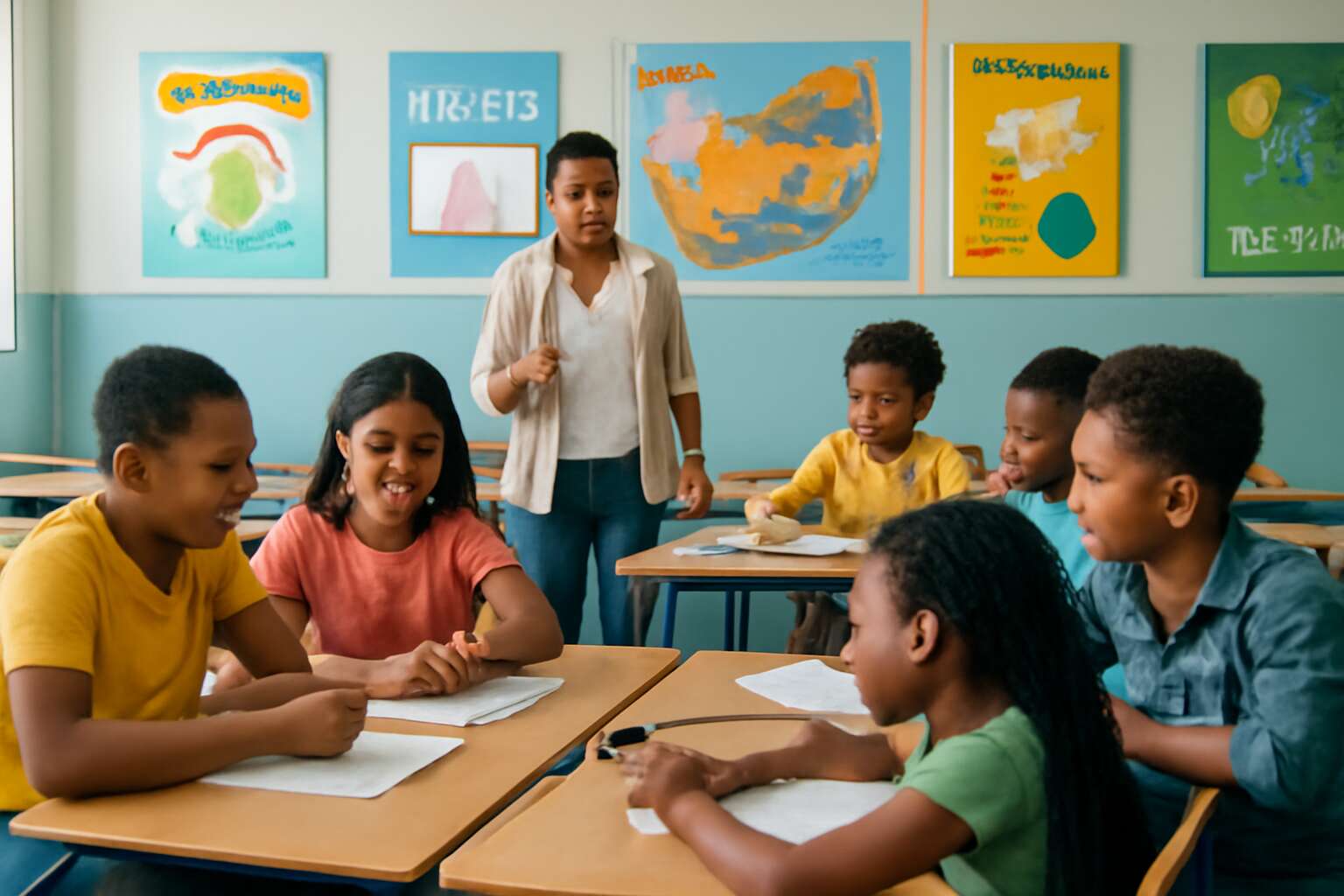
Overview of the KwaZulu-Natal Department of Education
What is the KwaZulu-Natal Department of Education
From rural townships to coastal towns, the kwazulu natal department of education serves as a steady beacon for learning. It sketches policy through classrooms, supports schools with resources, and champions the transformative power of schooling. This is where ambition meets structure, and every learner’s potential feels within reach.
Key pillars guiding its work include expanded access, teacher development, and safe, modern learning environments.
- Expanded access to primary and secondary schooling across urban and rural areas
- Ongoing professional development for teachers and school leaders
- Investment in infrastructure, libraries, and digital resources
With a focus on inclusive education, the department collaborates with communities, councils, and partners to monitor progress and celebrate milestones. Its work is a chorus of patience and progress, where every exam mark and classroom milestone echoes hope.
Mission, vision, and core values
In the heart of a province where classrooms glow like constellations, the kwazulu natal department of education lives by a bold belief: learning is the map that guides every journey. A trusted educator once declared, “Education is a doorway—step through and possibilities unfold!” The mission anchors this truth, translating promises into classrooms that welcome every learner.
The vision sees schools as living communities where curiosity is sparked, digital tools expand access, and safe spaces invite bold questions. It aims to turn ambition into achievement across urban and rural towns alike, shaping a future that reflects South Africa’s diverse spirit.
Core values guide every decision within the system. They are the compass for policy and practice:
- Learner-centred excellence
- Integrity and transparency
- Collaboration and community
- Innovation and adaptability
- Equity and inclusion
- Accountability in action
These tenets animate resource planning, teacher growth, and modern learning spaces—keeping learning a steady beacon across KwaZulu-Natal’s landscapes.
Geographic reach and student demographics
In kwazulu natal department of education, education glows like a living constellation. More than 2.6 million learners navigate this map, from vibrant coastal towns to quiet inland settlements. Threads of these journeys form a single, coherent mission—enabling every learner to find their spark.
Its geographic reach spans urban metros, rural heartlands, and coastal corridors. Key zones include:
- Urban and peri-urban centers such as eThekwini (Durban) and Pietermaritzburg
- Rural districts weaving through the province’s valleys
- Coastal towns along the Indian Ocean
- Smaller farming and mining communities scattered inland
Student demographics are equally diverse, a linguistic mosaic where isiZulu, English, and other tongues mingle in classrooms, reflecting South Africa’s broader spirit. The kwazulu natal department of education keeps this tapestry at the center of policy and practice, ensuring learning remains accessible, imaginative, and inclusive across KwaZulu-Natal’s landscapes.
History and milestones
Across KwaZulu-Natal, education has always been a map of possibility. Today, roughly 2.6 million learners light up classrooms—from bustling coastal towns to quiet inland valleys—thanks to a department that grew in step with South Africa’s transformation. The kwazulu natal department of education traces its roots to the post-1994 realignment of schooling, moving toward equity, access, and quality for every learner.
Its history is not a straight line but a sequence of deliberate milestones that turned policy into practice, shaping schools, teachers, and communities.
- 1997: Reorganization of provincial education structures to reflect democratic governance and equal opportunity.
- Early 2000s: Expanded infrastructure, rural electrification, and ICT pilots to bring classrooms closer to every learner.
- 2012 onward: Alignment with the national CAPS framework and inclusive education reforms.
Key Programs and Initiatives
Curriculum alignment and standards in KwaZulu-Natal
Across KwaZulu-Natal, a shift toward aligned learning has tangible results! A recent survey found 72% of schools reported clearer curriculum outcomes after targeted reforms. The focus is on practical programs that move the classroom from rote memorization to applied understanding.
The kwazulu natal department of education coordinates several core initiatives that drive curriculum alignment and standards, ensuring teachers have the tools they need to deliver the National Curriculum Statement and CAPS with fidelity.
- Curriculum alignment with National Curriculum Statement (NCS) and CAPS across grades
- Teacher development and mentoring programs to raise instructional quality
- Digital learning and ICT integration to support inclusive classrooms
- Regular assessment standards updates and moderation to ensure consistency
These initiatives aim to close gaps in access and outcomes, with regional support teams visiting schools and providing resources, while keeping the focus on quality, equity, and measurable progress.
Programs for learners with special needs
Key Programs and Initiatives for learners with special needs unfold with quiet momentum in KwaZulu-Natal. The kwazulu natal department of education champions inclusive education through targeted supports that reach classrooms and corridors alike, turning policy into practical, day-to-day assistance for students who learn differently. The aim is not mere accommodation but genuine access—every child given tools to participate and excel.
- Early identification and individualized education plans
- Assistive technologies and adapted learning materials
- In-class supports from specialist teachers and mentor networks
- Accessible transport and facility adjustments to remove barriers
Regional support teams visit schools, modeling strategies, sharing resources, and incubating partnerships with families and communities to sustain progress. This network mirrors the kwazulu natal department of education’s enduring commitment to accessibility, equity, and measurable growth across the province.
Digital learning and e-learning initiatives
Digital learning is reshaping KwaZulu-Natal classrooms with quiet momentum. The kwazulu natal department of education has turned every screen into a doorway—an invitation to participate, explore, and excel. In this system, access becomes accountability, and curiosity becomes a curriculum. Across rural schools and urban campuses, learning meets students where they are, not where a bell dictates fate.
Digital learning and e-learning initiatives expand beyond devices to voices, networks, and pedagogy. The aim is seamless, inclusive access: offline materials, low-bandwidth platforms, and adaptive assessments that respect pace and language. A culture of collaboration—across schools, families, and communities—amplifies impact and sustains momentum.
- Blended learning in core subjects
- Mobile learning labs and offline resources
- Professional development for teachers in digital pedagogy
School nutrition and welfare programs
Across kwazulu natal department of education, school nutrition programs feed more than 500,000 learners daily, turning school gates into gateways of health and hope. The welfare framework places well-being at the center of learning, recognizing that reliable meals unlock attendance, focus, and curiosity. When hunger is addressed, classrooms become laboratories of possibility and dignity.
- Nutritious breakfasts and mid-day meals aligned with the school calendar
- Social welfare outreach including clothing, school uniforms, and family assistance
- Accessible counselling and welfare services connected to community partners
These programs extend beyond campus walls, weaving nourishment, health, and social support into a resilient culture of care. The approach respects local needs and diversity, ensuring every learner feels seen—ready to learn, contribute, and grow.
Safety, anti-bullying, and student support services
Safety isn’t a sideline in KwaZulu-Natal classrooms; when learners feel safe, attendance climbs and curiosity takes flight. From the front gate to the chalkboard, every policy protects and empowers, so every learner can lean into discovery with confidence. The kwazulu natal department of education understands that courage blooms where fear is kept at bay, and support networks turn potential into progress.
Key programs unfold along three intertwined strands:
- Anti-bullying campaigns with clear reporting channels and student-led initiatives
- Safe corridor designs, lighting, and supervision to deter intimidation
- Confidential counselling and welfare access linked to community health partners
By weaving protection, respect, and access to services into daily school life, KwaZulu-Natal schools keep the flame of possibility burning even when shadows fall.
Governance, Policy, and Funding
Governance and organizational structure
Governance is the quiet powerhouse behind every school day. In the kwazulu natal department of education, policy must walk the talk—from laws to the classroom—with accountability and practical budgets.
Policy and funding governance are the dynamic duo that get resources to learners on time. The province aligns national directives with local needs, balancing equity, efficiency, and transparent procurement—key pillars include:
- Executive oversight by the MEC for Education
- Head of Department who translates policy into action
- District offices guiding school clusters and implementation
- School Governing Bodies ensuring community participation
Within the kwazulu natal department of education, the structure climbs a clean ladder: MEC, Head of Department, directorates, district directors, and school principals partnering with School Governing Bodies to keep policy practical.
Policy development and regulatory framework
In the kwazulu natal department of education, policy is the bridge between national directives and local classrooms. Mandela’s famous charge—Education is the most powerful weapon—lives as a reminder to turn law into learning, with accountability and practical budgets shaping each school day. Governance here is a living system: the MEC for Education sets direction, the Head of Department translates policy into action, district offices coordinate clusters, and School Governing Bodies keep communities at the table, ensuring relevance on every campus.
Policy development and the regulatory framework in the kwazulu natal department of education align national directives with local needs, guided by transparency, equity, and efficiency. This balance ensures resources reach learners with integrity and on time. The governance ladder—MEC, HOD, directorates, district directors, and school principals—binds policy to budgets and performance indicators.
- Executive oversight by MEC
- Policy translation by HOD
- District cluster guidance
Budgeting and funding mechanisms
Governance here is a living staircase: the MEC for Education sets direction, the Head of Department translates policy into action, and district offices knit clusters into coherent support. The kwazulu natal department of education turns law into learning, with communities steering the work and schools kept at the center of every decision.
Policy development in this landscape is married to budgeting with transparent line items and performance metrics. Resources flow with equity and efficiency, ensuring every rand appears where it matters—classrooms, libraries, and safe learning spaces.
- Baseline funding allocations based on enrollment and need
- Conditional grants for targeted outcomes
- School-level discretionary budgets with clear accountability
- District-wide performance contracts aligned to targets
Funding mechanisms operate as a disciplined art, balancing equitable access with long-term resilience, so learners in KwaZulu-Natal can flourish from dawn to dusk.
Accountability, reporting, and performance metrics
Governance here is a living staircase: the MEC for Education sets direction, the Head of Department translates policy into action, and district offices knit clusters into coherent support. The kwazulu natal department of education turns law into learning, with communities steering the work and schools kept at the center of every decision.
Policy development and budgeting move in tandem, guided by transparency and purpose, turning plans into tangible progress within every district. The framework rests on baseline allocations, equity-driven grants, and accountable school budgets that empower principals to tailor learning spaces.
- Baseline funding allocations based on enrollment and need
- Conditional grants for targeted outcomes
- School-level discretionary budgets with clear accountability
- District-wide performance contracts aligned to targets
Funding accountability is reinforced through rigorous reporting, independent audits, and performance metrics that translate into practical improvement across schools and districts, keeping learning visible from classroom to community.
Partnerships with districts and municipalities
Governance, policy, and funding partnerships connect district offices, municipalities, and schools in the kwazulu natal department of education. This is where direction meets delivery, as policy becomes action in classrooms, transport routes, and school resources. The aim is predictable funding, transparent planning, and real improvements that communities can feel, from the gate to the council chamber.
- Joint planning cycles that align district plans with municipal development goals
- Shared targets and performance dashboards for schools and clusters
- Transparent budgeting practices and accountability with community oversight
- Active community liaison and municipal collaboration teams in every district
These partnerships rest on practical collaboration: shared planning cycles, transparent budgets, and accountable reporting. When districts and municipalities align resources and targets, learning spaces open up and every pupil gains access to consistent support—even where resources are tight.
Schools and Student Experience
School categories in KwaZulu-Natal
In KwaZulu-Natal, dawn climbs the corridors with a patient, candlelit quiet. A striking statistic whispers of classrooms lit by tablets and chalk dust—a quiet revolution guided by the kwazulu natal department of education. “Education is the lantern that never goes out,” a long-time educator once murmured, and the line lingers as learners step into halls where curiosity is the only torch.
Within school life, student experience unfurls across distinct categories, each with its own flavor and rhythm. Among these schools, the experience varies by category:
- Public ordinary schools where daily routines anchor community life
- Special schools and resource centres supporting learners with diverse needs
- Technical and vocational tracks embedded in mainstream campuses
From safety protocols to nutrition support, these institutions stitch together a tapestry of care and challenge; the province peers toward a future where access, dignity, and ambition walk hand in hand.
Enrollment, admissions, and transfers
Across KwaZulu-Natal, the march from home to school is a quiet epic, where every new enrolment writes a line in a living ledger. “Education is a lantern that never goes out,” an elder educator once said, and the glow grows brighter with every child registered!
Enrollment windows open with the dawn; learners arrive with birth certificates, proof of address, and parent/guardian consent. The kwazulu natal department of education guides this process, balancing district intake, special needs placement, and transport eligibility.
Consider these essentials for enrollment, admissions, and transfers:
- Documents to bring: identity, birth certificate, and residence proof
- Key timelines: registration windows and transfer requests
- Appeals and placement: how decisions are reviewed and communicated
Across classrooms, the student experience unfurls with dignity and curiosity, as campuses knit families into a community where safety, transport, and support services keep the flame alive. I have watched gates swing open and futures brighten.
Assessment, exams, and results
Exams are rites of passage, a quiet storm that reveals how a learner thinks under pressure. In the kwazulu natal department of education system, schools stitch together assessments that honor curiosity as much as accuracy, turning corridors into arenas of growth. The aim isn’t merely to grade but to illuminate pathways—where effort, reflection, and hope meet clear feedback and fair timing.
- Formative assessments and feedback cycles that guide day-to-day learning
- Summative exams and term-end evaluations that measure mastery
- External matric and district-level assessments that benchmark across districts
- Progress dashboards and parent–teacher consultations that keep families in the loop
Results become a compass rather than a verdict. They guide learners forward, shape school support, and inform policy tweaks within the kwazulu natal department of education, ensuring every clear signal translates into practical opportunities.
Teacher workforce and professional development
Schools in KwaZulu-Natal are turning the everyday classroom into a realm of discovery, where corridors hum with questions and chalk dust becomes stardust. The kwazulu natal department of education nurtures a teacher workforce that learns alongside students, weaving professional development into the week rather than the term. When educators stay curious, student experience blossoms—bright ideas, thoughtful reflection, and collaborative problem-solving emerge as the new normal.
Here’s how the kwazulu natal department of education sustains a vibrant, supportive learning environment for teachers:
- In‑school coaching and mentorship
- Subject‑specific professional learning communities
- Flexible PD cycles aligned to classroom needs
- Digital literacy and assessment design training
As teachers grow, learners soar—schools become living laboratories of possibility and hope!
Engagement, Resources, and Careers
Public resources for parents and educators
The engagement of communities isn’t a checkbox; it’s a living thread that binds families to schools. Within the kwazulu natal department of education, dialogue fuels attendance, curiosity, and resilience—where a single conversation can change a week’s trajectory and leave a lasting footprint on a student’s confidence.
Resources for parents and educators arrive as accessible lifelines: multilingual portals, teacher development modules, and community study spaces that meet families where they are. They turn questions into steps and barriers into pathways.
- Online portals for parents and teachers
- Public libraries and community learning hubs
- Digital learning resources and tutorials
Careers: Public resources for those considering a future in education are visible and inviting: internship programs, scholarships, mentoring, and clear routes to professional growth. The framework invites curious minds to explore teaching, administration, and support roles as meaningful, durable vocations.
Contact information and district offices
In the kwazulu natal department of education, one well-timed conversation can steer a week—or even a semester. Engagement is not a checkbox; it’s a living thread tying families to schools. Global research suggests sustained dialogue boosts attendance and sparks resilience, turning fleeting curiosity into lasting confidence.
Resources arrive as accessible lifelines when they meet people where they are. Think multilingual portals, professional development for educators, and community spaces that blend digital horsepower with real-world study sessions—turning questions into steps and barriers into pathways.
Careers in education are a durable vocation across classrooms, administration, and policy support. The kwazulu natal department of education highlights internships, scholarships, and mentoring as entry points, with transparent routes to growth across districts. The door is open—step inside and see what you can build.
- Central inquiries: official website contact form
- District office directory by region
- General inquiries email
Online portals and e-resources
Engagement is not a checkbox; it’s a living thread tying families to schools. In the kwazulu natal department of education, a perfectly timed conversation can steer a week, a semester, or a child’s budding confidence toward resilience and belonging.
Resources arrive as lifelines when they meet people where they are. Think multilingual portals, professional development for educators, and community spaces that fuse digital horsepower with real-world study sessions—turning questions into steps and barriers into pathways.
- Multilingual portals that translate policy into practice
- Professional development modules for educators
- Community spaces blending online access with in-person study sessions
Careers in education are a durable vocation across classrooms, administration, and policy support. Careers online portals and e-resources spotlight internships, scholarships, and mentoring, with transparent routes to growth across districts. The door is open—step inside and see what you can build.
Public engagement and feedback channels
In the kwazulu natal department of education, engagement isn’t a checkbox—it’s a living thread tying families to schools. A single well-timed conversation can steer a week of learning toward resilience and belonging.
Public engagement and feedback channels keep that thread taut. Schools host town halls, quick surveys, and SMS updates that invite honest voices from parents, learners, and teachers.
- Town halls and district forums
- Digital surveys and feedback portals
- Open-door sessions with principals and coordinators
Resources arrive as lifelines when they meet people where they are: multilingual portals that translate policy into practice, professional development for educators, and community spaces that fuse digital horsepower with real-world study sessions.
Careers in education are a durable vocation across classrooms, administration, and policy support. Careers online portals and e-resources spotlight internships, scholarships, and mentoring, with transparent routes to growth across districts. The door is open—step inside and see what you can build.
Careers and training opportunities in education
In the shadowed corridors of learning, a single conversation can steer a week toward resilience and belonging. The kwazulu natal department of education treats engagement as a living thread—not a checkbox, but a promise that families and schools share.
Resources arrive as lifelines when they meet people where they are: multilingual portals translating policy into practice, targeted professional development for educators, and cozy community spaces that fuse digital horsepower with real-world study sessions.
- Multilingual portals
- Professional development for educators
- Community study spaces
Careers and training opportunities in education offer durable paths across classrooms, administration, and policy support. Careers online portals spotlight internships, scholarships, and mentoring, with clear routes to growth across districts. The door is open—step inside and imagine what can be built!