
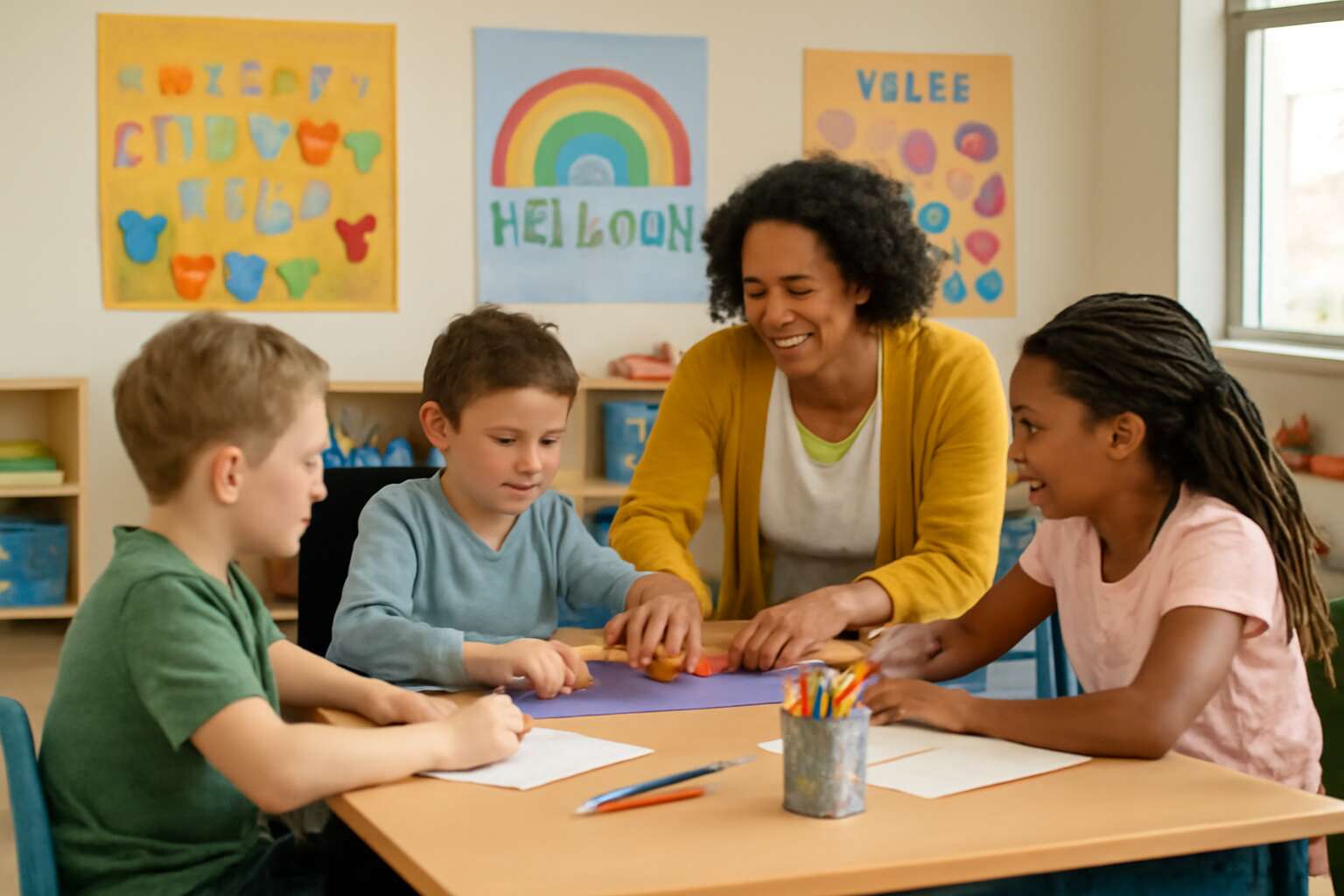
Understanding Inclusive Education
Definition and core principles
In South Africa, inclusive education means more than access; it’s a moral recalibration of how classrooms carry every learner. A space that truly includes cuts through labels and invites possibility. When barriers fall, curiosity leads the way—learning becomes communal!
Core principles anchor this shift. Consider:
- Equity in access to resources and support
- Universal design for learning that adapts to all
- Collaborative assessment and ongoing feedback
- Active participation from diverse voices
These principles convert diversity from a label into a catalyst for achievement. In practice, it means flexible curricula, accessible environments, and relationships built on trust rather than hierarchy. The outcome? classrooms that reflect South Africa’s rich tapestry while elevating every learner’s potential.
Key stakeholders involved
“Education is the most powerful weapon you can use to change the world.” Nelson Mandela’s words still ring true in South Africa. Inclusive education means more than seating every learner; it demands systems that embrace varied needs, cultures, and talents. When classrooms listen, curiosity becomes the driver and learning becomes communal!
Key stakeholders involved form a coalition with serious responsibilities. This is what inclusive education means when schools act in concert: learners, families, teachers, principals, school governing bodies, district offices, the Department of Basic Education, health and social services, and NGOs align resources, training, and feedback.
- Learners and families
- Teachers and support staff
- School leaders and governing bodies
- District offices and Department of Basic Education officials
- Health, social services and NGO partners
Together, they translate policy into everyday practice, shaping classrooms where every learner can belong and contribute.
Benefits for students and schools
Nelson Mandela’s legacy still guides SA classrooms: inclusive education means classrooms where every learner belongs and can contribute. When schools design supports for varied needs, cultures, and talents, education becomes a shared venture. Curiosity rises, collaboration grows, and attendance often improves as learners feel seen and valued.
- Better academic outcomes for diverse learners
- Stronger social-emotional skills
- More resilient school communities
Schools benefit when inclusive practices lift outcomes for all. By embedding universal design for learning and coordinated support, teachers reach learners who learn in different ways, from multilingual students to those with additional needs. In South Africa, collaboration with health services and NGOs helps sustain momentum.
Common misconceptions about inclusive education
Nelson Mandela once declared, “Education is the most powerful weapon which you can use to change the world.” That conviction animates inclusive education means classrooms where every learner belongs and can contribute, regardless of background or ability. It’s not a soft ideal; it’s a rigorous approach that invites teachers to redesign learning so curiosity and collaboration become the norm.
Understanding inclusive education means embracing diversity as the engine of learning in South Africa’s classrooms, not a problem to be managed. Common misconceptions about inclusive education include:
- Myth: Inclusion lowers standards. Reality: with flexible supports and universal design for learning, all learners can reach higher outcomes.
- Myth: Everyone must learn the same way at the same pace. Reality: multiple pathways and flexible grouping meet varied needs.
- Myth: Inclusion is only for students with visible disabilities. Reality: it benefits multilingual learners and those with different talents too.
Global perspectives and policy context
Understanding inclusive education means tuning into a global policy heartbeat as much as a school corridor. Globally, 244 million children and youth remain out of school, a gap that policy makers seek to close with rights-based frameworks and shared accountability. From local classrooms to international pledges, the current climate emphasises accessible, quality learning for every learner—no exceptions.
- Salamanca Statement (1994) and the shift toward inclusive schools
- UNESCO Education 2030 and SDG 4: inclusive, equitable quality education
- South Africa’s White Paper 6 and national integration of inclusive practices
- OECD and global monitoring indicators that track progress toward real outcomes
These policies shape how inclusive education becomes a lived reality, aligning teacher preparation, resource allocation, and community engagement.
Strategies for Implementing Inclusive Education
Curriculum adaptations and universal design for learning
inclusive education means classrooms that bend to every learner’s rhythm. In South Africa, where eleven official languages share one school day, the challenge is not exposure alone but meaningful access—through curriculum adaptations and universal design for learning (UDL). Flexible pacing and multimodal resources unlock participation and curiosity.
- Curriculum adaptations aligned with CAPS that respect language diversity
- Universal Design for Learning to provide multiple means of representation, action, and engagement
- Flexible assessment practices that capture growth across diverse profiles
Effective implementation rests on collaborative planning, professional development, and family engagement. With accessible digital tools and flexible materials, classrooms become laboratories of inclusion where every learner can contribute, reflect, and grow.
Supportive teaching practices and classroom management
In South Africa, eleven official languages share one school day, a vibrant chorus that can feel like a maze unless inclusive education means turning such diversity into a roadmap for participation. Classrooms become living ecosystems where routines are visible, language variety is honored, and every learner is invited to contribute with confidence and curiosity.
Strategies for implementing inclusive education center on predictable structures and collaborative culture.
- Structured routines and predictable transitions
- Collaborative planning with specialists and families
- Flexible grouping and multimodal instruction
- Explicit feedback and accessible assessment cues
Supportive teaching practices also hinge on calm classroom management, where positive behavior supports guide interactions, quick adjustment of pacing, and use of inclusive language that invites every learner to share, reflect, and grow.
Assistive technologies and accessibility
In a South African classroom where eleven official languages braid into daily talk, inclusive education means turning that lively chorus into a navigable roadmap for participation. A veteran educator reminds me that the human story in every learner is unveiled when space is made for difference. Assistive technologies and universal accessibility are not add-ons but foundations—quietly re-framing how we share content, give feedback, and assess growth in real time. This mindset makes logistics a invitation to participation, not a cage of labels.
Strategic use of tools and design choices anchors this work.
- Assistive technologies and accessible formats that accommodate multilingual and multimodal communication
- Flexible interfaces with adjustable text, contrast, and navigation to support diverse learners
- Assessment cues that align with varied demonstrations of understanding, not one rigid standard
In South Africa’s diverse classrooms, these elements become a collective responsibility that invites every learner to participate with confidence and curiosity!
Collaborative planning with specialists and families
Across vibrant South African classrooms, a simple metric governs success: engagement grows when voices meet at the planning table. In fact, studies show collaborative planning can lift participation by up to 25% — inclusive education means turning those conversations into a living map that guides every learner’s path.
Strategic collaboration with specialists and families begins with regular co-planning sessions, shared data, and a language all participants own. I have watched teams lean in when families share stories and data.
- Joint planning sessions and clear roles
- Shared observation tools and progress notes
- Open family feedback loops that shape goals
When these threads are woven into daily practice, participation becomes a natural outcome rather than an obligation!
Assessment accommodations and flexible evaluation
In vibrant South African classrooms, inclusive education means meeting diverse minds where they stand—and it starts the moment assessment conversations begin. Engagement rises when evaluation honors different ways of showing knowledge, with gains up to 25% when the process bends around student strengths. Silent corridors become avenues of possibility as teachers learn to listen for signatures of understanding beyond a single test.
Strategies for implementing inclusive assessment accommodations embrace fairness and clarity.
- Multiple modes of demonstration (oral, written, practical) that honor varied expression
- Flexible timing and pacing that respects individual rhythms
- Transparent rubrics and ongoing feedback that guide growth
Flexible evaluation breathes life into learning, turning assessment from gatekeeper to guide in our shared curriculum.
Inclusive Education in Practice Across Settings
Early childhood and primary education
“inclusive education means more than access; it’s a design for belonging.” In South Africa, early childhood and primary spaces turn that design into daily practice—learning comes through shared play, inquiry, and guided collaboration. Classrooms become hubs where differences are not barriers but assets, and every learner has a way to participate.
In practice, settings vary but share core moves:
- Co-planned activities that blend strengths across ages
- Flexible grouping and accessible materials to support diverse skills
- Active family partnerships that reinforce learning at home and school
From crèches to primary aftercare, teachers craft inclusive routines with peers and support staff, ensuring participation, language access, and rhythm in daily learning.
Secondary education and transitions
In South Africa, schools that embed inclusive practices report double-digit boosts in student engagement during key transitions. inclusive education means more than access; it guides transitions between phases and subjects, turning corridors into guided routes toward achievement. In secondary spaces, learning unfolds through collaborative projects, language-accessible materials, and peer mentorship that supports every learner as they move toward matric and beyond.
Weave routines that honor adolescence, turning classrooms into waypoints on a quest, with bridging programs, structured mentoring, and shared planning across departments. The following approach helps:
- Co-created transition plans that pair senior students with younger peers
- Flexible timetables and accessible resources across subjects
- Family engagement to reinforce learning as learners face new environments
These practices keep belonging at the heart of secondary education, guiding every learner toward the next horizon with confidence and curiosity.
Specialist schools vs inclusive mainstream models
In South Africa, inclusive education means more than access; it is a living map that invites every learner to advance with dignity. Two journeys share the same horizon: specialist schools with tight-knit teams and targeted support, and inclusive mainstream models that embed collaboration and accommodations in every classroom. The goal stays clear—belonging, progression, and unbridled curiosity—yet the routes vary to fit diverse strengths and school cultures.
Specialist settings offer focused, holistic care: smaller cohorts, on-site therapists, and deliberate transition pathways within a protected learning environment.
- Multi-disciplinary teams collaborating on personalized plans
- Structured opportunities for peer mentorship and skill-building
- Seamless access to therapy, sensory spaces, and targeted assessment
Inclusive mainstream models widen that same care across the school, using universal design, flexible timetables, and family partnerships to ensure belonging and participation for every learner.
Inclusive physical environments and safety
In practice, inclusive education means turning school spaces in South Africa into safe, navigable places where every learner can move with dignity—whether in a sunbaked rural classroom or a modern urban block. The focus shifts to how environments support participation: clear pathways, ramps, accessible toilets, and sensory-friendly corners that reduce overwhelm without singling anyone out.
- Accessible routes from entry to every learning zone
- Adaptive lighting and acoustics that support focus
- Inclusive play areas where classmates collaborate
- Evacuation plans that cover every learner and carer
When physical environments feel secure, teachers can reach the hearts and minds of learners, building confidence that travels from the mat to the midday break and beyond.
Measuring Impact of Inclusive Education
Key metrics and outcomes for students
Inclusive education means more than access; it’s a living metric of how learners grow together. In South Africa, diverse classrooms—from township schools to rural communities—show higher attendance and deeper engagement when inclusive practices take root. A rural headteacher once whispered, “Belonging changes everything,” and the data backs that up, turning hopeful aims into tangible gains for learners who once felt unseen.
- Attendance and retention trends
- Active participation and verbal contribution
- Reading, writing and numeracy progress
- Peer relationships and sense of belonging
- Transition outcomes and readiness for post-school life
These metrics translate into safer, more curious classrooms; measuring what matters to learners beyond the report card.
Data collection and monitoring progress
In many South African classrooms, inclusive education means attendance rises by up to 15% when learners feel they belong. As one rural headteacher whispered, “Belonging changes everything,” and the data backs that up, turning hopeful aims into measurable gains for learners who once felt unseen.
Measuring impact requires coherent data collection and ongoing monitoring that respects privacy and ethics. This is about what learners experience daily, not just what sits in a report.
Key entry points for gathering insight include:
- teacher observations and student voice snapshots that reveal engagement
- anonymous attendance and participation records to track consistency
- formative assessments aligned to learning goals to show growth over time
When data speaks in the language of belonging, classrooms become safe, curious places where every learner can thrive.
Evidence of success and case studies
Across South Africa, pilot campuses report attendance rising up to 12% when learners feel they belong, turning classrooms into engines of engagement. The data isn’t a distant chart; it breathes in daily moments of curiosity and support. This is what inclusive education means in practice: turning belonging into visible growth. True success shows in rising participation and growing confidence.
- Case study: a rural KwaZulu-Natal school saw engagement rise as peer circles and flexible seating were introduced.
- Case study: a Gauteng high school reports higher course completion and stronger student voice after mentoring and feedback loops.
- Case study: a coastal early childhood program with families built attendance consistency and early literacy gains.
In these stories, measurement becomes a mirror—reflecting belonging as learning, courage, and futures unfolding.
Addressing challenges and pitfalls
In South African classrooms where belonging blossoms, numbers reflect more than pages—they reflect courage. The daily heartbeat shows, and with this, inclusive education means tracing belonging through daily moments, not just exams.
Measuring impact should be a living art, not a sterile ledger. It requires listening to learners, families, and teachers as data points dance together.
- Data gaps and uneven sampling distort what we see on screen.
- Bias in assessments can hide true progress for some learners.
- Short-term metrics risk missing long-term growth and transitions.
- Resource constraints shape what can be measured and supported.
Measurement should be a mirror, not a weapon; when designed with learners’ voices and families’ insight, it reveals belonging as learning, courage, and futures unfolding in daylight and dusk alike.
Policy implications and scaling up
In South Africa, inclusive education means more than access; it’s tied to a 25% rise in learner engagement in pilot schools. When policy embraces belonging as a daily practice, the classroom becomes a community. The data tells a story beyond test scores—courage, participation, and sustained attendance.
Scaling up hinges on policy that listens to learners and families and builds measurement as social practice, not a blunt instrument. This pivot shifts from merely access to daily belonging. Policymakers should invest in three areas:
- Policy alignment with school realities and local needs
- Sustainable funding and capacity-building for teachers and support staff
- Data systems that foreground learner voices and daily belonging