
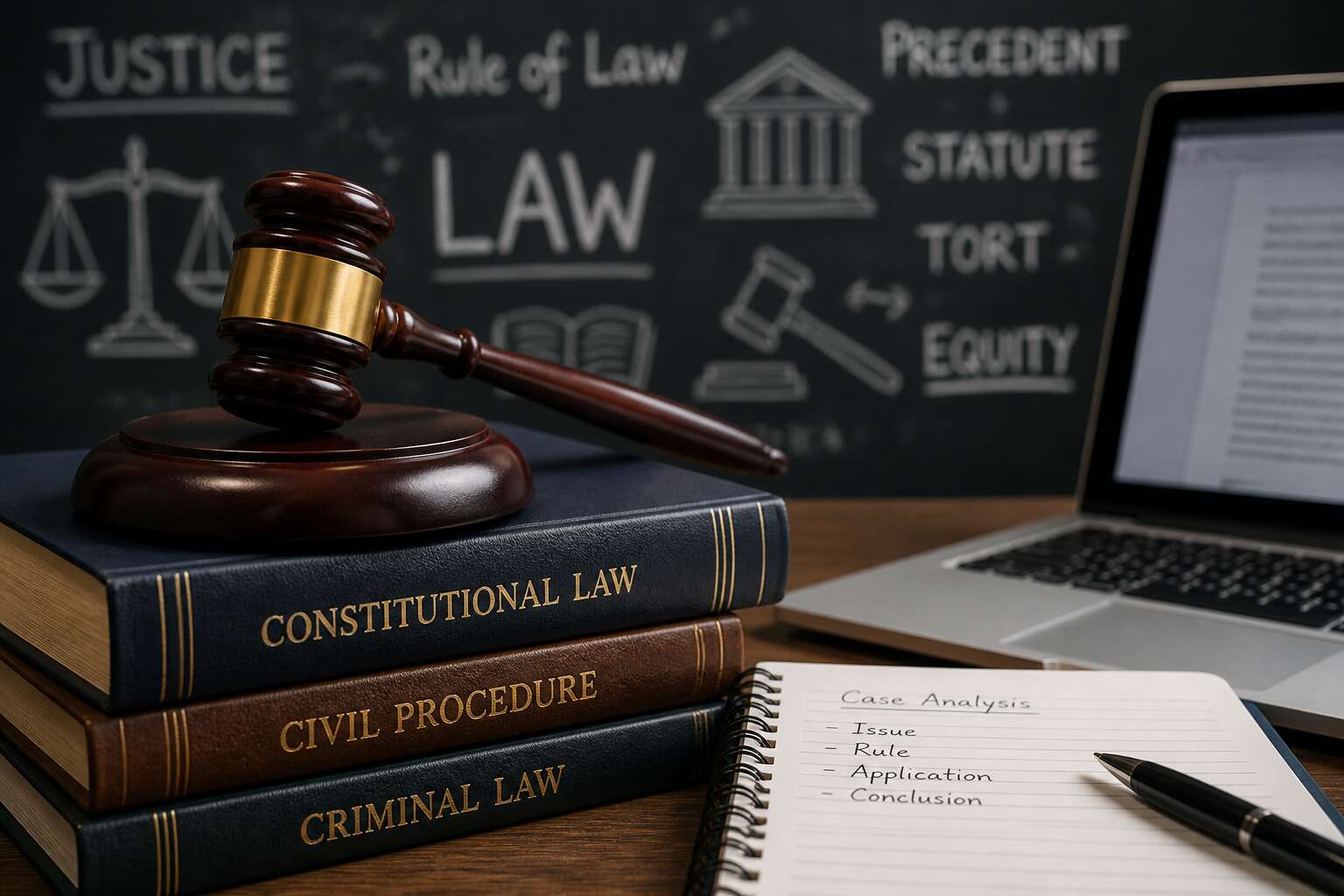
The Legal Framework Governing Schools
Federal vs. State Education Law
The South African Schools Act of 1996 establishes a uniform baseline, but provincial legislatures enact their own regulations for admissions, language policies, and codes of conduct. This layered structure creates a complex legal terrain. The true nature of law in education emerges when a single national statute produces nine distinct provincial applications.
Provincial variances include the following:
- Curriculum implementation timelines differ per province.
- Teacher employment conditions vary under provincial bargaining councils.
- School infrastructure funding gets distributed by provincial treasuries.
The national Department of Basic Education sets the framework, while provincial education departments hold operational authority. This division often triggers disputes over jurisdiction. The Constitution resolves these conflicts, but only after litigation. For school leaders, compliance demands attention to both national and provincial law. Every decision must pass the test of dual legitimacy. That is the real weight of law in education.
Constitutional Rights in the School Context
When a learner steps through the school gate, the Constitution does not fall away. Section 29 guarantees everyone the right to a basic education, and Section 28 adds child-specific protections. Schools also maintain discipline via codes of conduct. The law in education requires balancing these competing interests.
Key rights in the school context include:
- Learners have the right to equal treatment in admissions and programmes.
- Freedom from harmful punishment is protected under Section12.
- School searches may not breach the right to privacy.
Courts have made clear school policies cannot override fundamental rights without justification. The limitation clause allows reasonable restrictions, but only if legally defensible. This legal framework forces principals to think carefully before acting. In my experience, many discipline problems come from ignoring this tension! Understanding constitutional rights is the heart of governance, and the true measure of law in education is tested here.
The Role of Administrative Agencies
Behind every school policy sits a web of administrative oversight that most parents never see. The legal framework governing schools depends heavily on agencies that translate statutes into enforceable practice. In South Africa, the Department of Basic Education establishes national norms, while provincial departments adapt them to local realities. SACE regulates teacher conduct. Umalusi safeguards assessment standards.
Each body exercises delegated authority that shapes daily school life. In my experience, school leaders often underestimate how much administrative law influences their decisions. An agency determination can override a school’s internal ruling. This layer of governance gives law in education its practical force. Principals must trace every directive to its administrative source before acting.
Student Rights and School Discipline
Free Speech and Expression
Section 16 of the Constitution protects free expression, but it does not give learners unlimited licence. School codes of conduct regulate speech that disrupts teaching or harms others. This is where law in education shapes the boundary between voice and order.
Courts expect schools to act fairly. Learners can challenge unreasonable restrictions. The key question is whether the speech caused material disruption:
- Political statements during breaks usually receive protection.
- Hate speech and threats fall outside constitutional protection.
- School uniforms and dress codes limit symbolic expression.
Discipline must follow procedural fairness. A suspension without a proper hearing violates both the Schools Act and the Constitution. Learners who understand their rights become more engaged citizens, not more disruptive ones.
Search and Seizure on Campus
Across South African schools, the pocket search is a quiet battlefield. That panado strip or smartphone in a blazer pocket, it turns reasonable suspicion into a constitutional argument. The law in education demands schools balance safety with dignity.
The 1996 Constitution allows rights to be limited under certain conditions, but only through a justifiable law of general application. A school principal’s hunch does not qualify. Warrantless searches, while common, face strict scrutiny. The Courts have outlined that a school’s authority extends to maintaining order, not mimicking police raids.
To avoid legal pitfalls, schools should consider the following when forming their search policies:
- Reasonable suspicion must be based on specific, observable facts.
- Privacy expectations differ between lockers, desks, and personal bags.
- Strip searches are never justified in a school setting.
- Parents and learners must consent to routine property inspections.
Your humble class monitor might have the power to check for contraband, but the law requires proportionality. A blanket policy to search every learner for a missing phone is likely arbitrary. A targeted search of a learner seen hiding a vape is more defensible.
This delicate interplay of authority and rights is central to the law in education. Schools must document incidents, inform parents promptly, and treat all learners with equal suspicion. When a search crosses the line, the evidence collected becomes useless in a disciplinary hearing. The lesson here is that order, when built on procedural negligence, crumbles quickly. A fair process is the only durable foundation for school safety.
Due Process in Suspensions and Expulsions
Students facing suspension or expulsion are protected by the law in education. South African courts require procedural fairness in disciplinary proceedings.
This includes clear notice of allegations, access to evidence, and a chance to respond. An impartial decision maker must consider all relevant facts. Minor infractions may allow a simple conversation. Serious offences like theft demand a formal hearing.
Parents should be informed promptly and can bring representation. The law in education also demands proportionate punishment. A zero tolerance policy that ignores context risks being overturned. Schools must document every step, from initial complaint to final decision. This record prevents arbitrary action. Expulsions require full compliance with constitutional standards. Without due process, disciplinary action loses legal standing and jeopardises the school’s position.
Privacy Rights and FERPA
A child’s report card contains more than grades. It holds legal weight. Student records are protected under privacy legislation. In South Africa, POPIA sets the standard. Courts interpret this law in education contexts with care. FERPA, the American framework, offers a comparative lens. Both systems grant families specific rights. Parents can inspect files and challenge inaccuracies. Schools must not disclose information without consent. This applies to mental health notes, disciplinary records, and attendance logs.
Schools facing privacy violations must act swiftly. A small leak can become a major liability. Staff need training on handling sensitive data. Consent forms should be explicit, never buried in fine print.
The typical protections include:
- Access to your child’s official records
- The right to request amendments
- Restrictions on data sharing with third parties
When a student reaches 18, these rights transfer to them. The law in education requires storage systems that prevent unauthorised access. A breach damages trust and invites legal action. Schools should treat every file as if it were a courtroom exhibit. That diligence preserves dignity and compliance.
Bullying, Harassment, and Civil Rights
Bullying is not a rite of passage. It is a legal violation. When harassment targets a student’s race, gender, or disability, the school’s duty shifts from discipline to civil rights compliance. The law in education demands proactive measures, not reactive shrugs. A single unchecked pattern of abuse can expose a school to liability under the Promotion of Equality and Prevention of Unfair Discrimination Act.
Schools must document every complaint. They must separate the accused and the victim, interview witnesses, and preserve evidence. The process should mirror a formal inquiry.
Some actions are unmistakable:
- Physical assault
- Verbal threats based on identity
- Exclusion from school activities
Each requires a written response. The legal framework does not tolerate indifference.
Special Education and Disability Law
The Individuals with Disabilities Education Act
In the United States, the Individuals with Disabilities Education Act, or IDEA, secures a free appropriate public education for over seven million children with disabilities. That single number reshapes how we understand law in education. IDEA demands an individualized education program for each eligible learner, with parent involvement and due process safeguards built in. This legal architecture is notable for its specificity.
For South African readers, comparing this with our own inclusive education policies under White Paper 6 reveals a critical contrast. IDEA operates as a legal entitlement. Our framework is policy driven. The core elements of IDEA include:
– Free appropriate public education (FAPE)
– Individualized education programs (IEPs)
– Least restrictive environment (LRE)
– Procedural safeguards for families
These provisions create measurable accountability, something our system still struggles to enforce. This makes American practice a useful reference point, even if our legal landscape differs.
Crafting Compliant IEPs
In the United States, special education lawyer Peter Wright once called the Individualized Education Program “the most important document in a child’s life.” That claim carries weight when you consider that a poorly drafted IEP can lead to years of litigation, while a well-constructed one can transform a student’s trajectory. For South African educators and parents navigating White Paper 6, the comparison offers more than academic curiosity; it reveals how the law in education operates when it shifts from policy aspiration to enforceable right.
The law in education functions differently in the two countries. In America, IDEA imposes statutory deadlines, specific evaluation procedures, and explicit parental consent requirements. White Paper 6, by contrast, frames inclusive education as a policy directive rather than a binding duty. The result is that South African IEPs, where they exist, often lack the procedural rigor that American schools must follow. This matters because the law in education only protects students when the documents carry legal teeth.
A compliant IEP requires several non-negotiable components:
- Measurable annual goals tied to baseline data
- A statement of present levels of performance
- Specific accommodations, not vague assurances
- Planned participation in general education settings
- Progress reporting at regular intervals
Without these elements, an IEP becomes a sketch rather than a contract. Schools that treat IEPs as compliance paperwork miss the point. The law in education exists to guarantee meaningful access, not merely procedural box-ticking. When South African schools borrow from the IDEA model, the substance matters most: clear goals, data-driven updates, and genuine parent participation. That is where the real protection lies, for students and for schools alike.
Resolving Disputes with School Districts
When disputes arise over a child’s right to education, South African parents face a complex set of procedures. The law in education provides specific mechanisms to challenge decisions made by school districts or governing bodies. The South African Schools Act allows parents to appeal certain decisions, while the Promotion of Administrative Justice Act demands fair process.
Before escalating matters, consider these practical steps:
- Request a written explanation of the school’s decision
- Attempt mediation through the district office
- File a formal complaint with the provincial head of department
Many parents resolve matters without escalating to court. Documentary evidence, clear timelines, and consistent communication remain essential throughout. When mediation fails, parents may approach the High Court. Yet proceeding requires careful planning and often legal representation. Every parent should keep copies of all correspondence and official responses. These records are essential for any successful challenge under the law in education.
Teacher Employment and Institutional Liability
Contracts, Tenure, and Dismissal
Every year, South African teachers enter classrooms with permanent contracts and specific duties. The law in education shapes what happens when those contracts collapse. A school’s liability does not end at the classroom door. It extends to how principals document poor performance, misconduct, or incapacity.
Tenure is not permanent. For public school teachers, the Employment of Educators Act sets clear procedures for dismissal. Institutional liability depends on following those procedures to the letter. Boards often lose cases because they skip steps.
Consider what a dismissal file must contain:
- A written warning with specific dates
- Evidence of the educator’s response
- Minutes from disciplinary hearings
Without this paper trail, the law in education offers teachers strong recourse. I have seen arbitrators reinstate educators because an employer failed to prove due process. Watch that documentation!
Academic Freedom and Classroom Speech
A single classroom remark can trigger institutional liability within minutes. South African teachers hold academic freedom, yet the Constitution does not shield every utterance. The law in education draws a line between protected scholarly discourse and speech that harms learners or undermines school policy.
Consider what courts examine when a parent complains:
- The educator’s intention and context
- The connection to the curriculum
- The school’s prior guidance on controversial topics
Institutional liability follows the paper trail, and I have seen courts punish schools that ignored warning signs. If a principal never addressed a teacher’s pattern of provocative statements, the school shares the blame. Classroom speech is not absolute. It bends to the learner’s right to dignity, to safety, and to a nonpartisan learning environment. The law in education makes that clear. Professional autonomy stops where the school’s duty begins!
Negligence and Duty of Care
A school’s duty of care extends further than most educators realise. When a teacher acts recklessly, the institution shares responsibility for that failure. South African courts examine whether the school took reasonable steps to prevent harm. This includes vetting staff, providing clear guidance, and acting on early warnings.
In my experience, negligence claims often arise from poor oversight. A principal who ignores a teacher’s erratic behaviour sets the school up for liability. The law in education treats this as a breach of duty. Schools must also protect whistleblowers who report unsafe conduct.
- Failure to conduct background checks
- Ignoring repeated complaints
- Lack of classroom supervision
Each omission strengthens a plaintiff’s case. Institutional liability depends on a clear chain of responsibility, and schools that break that chain pay dearly!
Mandated Reporting Requirements
The classroom door closes, and what happens inside can define a school’s future. South African law in education imposes a non-negotiable duty on teachers to report suspected child abuse or neglect. This mandated reporting requirement is not a suggestion; it is a statutory obligation. When educators fail to act on visible injuries or troubling behavioural shifts, they expose the institution to severe institutional liability.
In my experience, the failure to escalate concerns often stems from a misguided sense of loyalty to a colleague. Schools must cultivate a culture where reporting is the default. The consequences for silence are profound. Penalties extend beyond professional censure to criminal charges and civil claims. The law in education treats a bystander teacher as complicit, and the institution shares that burden.
Schools face specific breaches that trigger liability:
– Failure to document observable signs of abuse
– Delaying notification to the relevant authorities
– Discouraging staff from filing formal reports
Each omission creates a fissure in the protective framework. The school’s duty is proactive, not reactive. A principal who dismisses a report as hearsay compromises the entire institution’s standing. Mandated reporting is the first line of defence, a legal shield that requires constant vigilance.
Copyright and Fair Use in the Classroom
In education, legal obligations do not fade when the door closes. South African law in education demands that every teacher act as a sentinel. When a bruise is ignored, the institution bears the blame. Employment contracts require vigilance, but misplaced loyalty to a colleague often suppresses the truth. Schools must embed reporting as a default reaction, not a choice. Consider these required steps:
- Document every suspicious mark.
- Notify the designated official immediately.
- Avoid informal chats that dilute evidence.
Copyright in lessons presents another hazard. Photocopying a textbook chapter without permission invites legal claims. Fair use protects only limited purposes such as criticism, review, or brief quotation. Teachers who share worksheets online must confirm ownership. The law in education does not excuse ignorance. It rewards cautious professionals who understand that every handout and every quiet conversation carries legal weight. Ignorance is not a defence; it is a citation waiting.
Employment Discrimination and Title VII
Teachers carry legal obligations that do not pause at the classroom door. Law in education requires every educator to act as a sentinel, documenting suspicious marks and reporting designated officials without delay. Ignorance is not a defence. Every handout and quiet conversation carries weight, and a misplaced loyalty to a colleague can suppress truth. Institutional liability follows when a bruise is ignored or a copyright is breached. Photocopying a chapter without permission invites claims. Fair use only protects limited purposes like criticism or review. The law in education rewards careful professionals who confirm ownership and understand due process. Contracts, tenure, and dismissal procedures shape every decision, and neglect of these duties carries real consequences.
Emerging Legal Frontiers in Education
Digital Privacy and Student Data
One in three South African schools has experienced a data breach, yet only a fraction report it to authorities. This vulnerability sits at the heart of emerging legal frontiers in education, where digital privacy and student data collide with outdated policies. The law in education now stretches beyond classrooms into cloud servers and learning management systems.
POPIA requires schools to appoint information officers, conduct impact assessments, and secure parental consent for minor data. However, the practical application is messy. Many schools outsource platforms, creating unclear accountability. A single misconfigured database can expose biometric information, medical records, or behavioural assessments.
- Tracking cookies on school portals
- Third party educational apps
- Cloud storage of test results
Each element raises distinct questions about lawful processing and data minimisation. Without updated jurisprudence, schools remain exposed. The law in education must evolve, or the digital classroom becomes a liability rather than an opportunity.
Title IX and Campus Sexual Misconduct
Sexual misconduct on campus remains a persistent legal blind spot. Title IX in the United States has forced universities to overhaul grievance procedures, yet the compliance burden often outweighs clarity. For South African institutions, the comparison is instructive. The law in education here must address similar pressures without importing a flawed template. Key questions emerge: Who investigates complaints? What constitutes a fair hearing? How do colleges balance accuser and accused rights?
- Notice requirements and trauma informed interviews
- Standard of proof versus criminal burden
- Sanctions ranging from suspension to expulsion
These procedural elements shape whether survivors feel heard or institutions face litigation. Title IX’s evolution offers warnings, not answers. The law in education should prioritise consistent, transparent processes over punitive symbolism.
School Choice, Vouchers, and Charter Schools
The most significant education reform movement of this decade may not originate in a courtroom but in the marketplace of parental choice. When funds follow students, the legal architecture changes. We are witnessing a shift from purely administrative law in education to a consumer protection model.
This transition raises fundamental questions about governance in South Africa. Who is accountable when a school fails? Does the state owe a duty to the child or to the taxpayer who funded the voucher? The regulatory framework must prevent a two-tier system.
Consider the legal architecture required for a functioning market:
1. Constitutional alignment with the right to basic education.
2. Oversight mechanisms for financial probity of private operators.
3. Clear liability rules for special needs admissions.
4. Transparent admission policies to prevent social stratification.
Litigation will inevitably challenge the boundaries of these new models. Charter schools exist in a statutory grey zone, governed by contract law yet bound by constitutional imperatives. The next legislative cycle must clarify these tensions before the courts do it arbitrarily. The legal profession must guide this evolution with precision, ensuring the rule of law remains the bedrock of opportunity.