
Understanding the Core Concept
Defining the Educational Approach
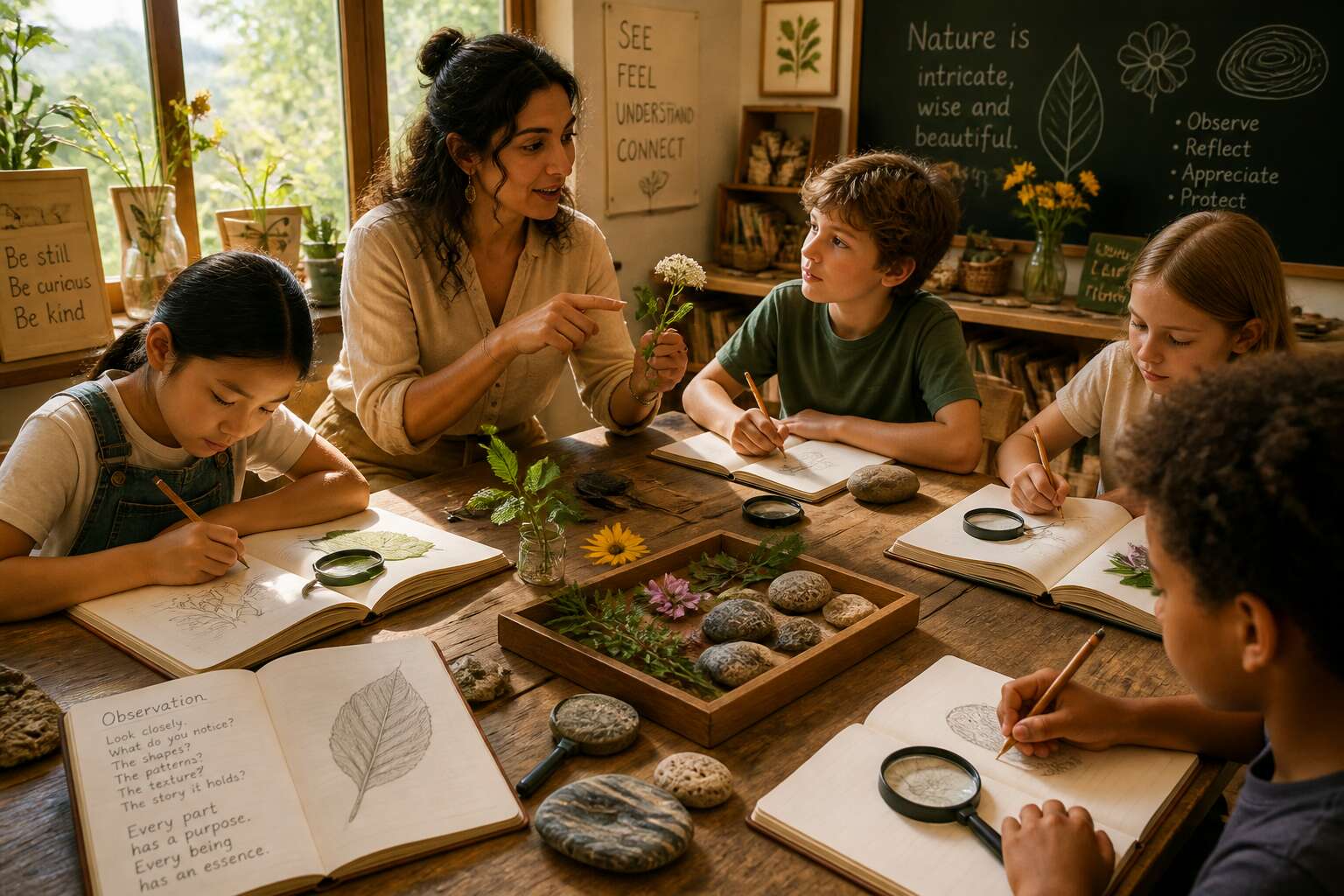
Understanding inscape education begins with a quiet observation. This approach treats the learner’s inner world as the primary classroom, where perception, memory and imagination shape meaning. In South Africa, where diverse narratives converge, this inward focus helps students locate their own voice before engaging with external material.
Inscape education positions educators as guides rather than transmitters. They design conditions for deep reflection, using journaling, dialogue and creative expression to surface what students already know. The method values process over product, trusting that clarity emerges through sustained attention.
- Personal meaning-making over rote recall
- Facilitated self-inquiry as a daily practice
- Assessment based on reflective artefacts
Academic rigour remains central, yet it becomes grounded in authentic experience. Inscape education equips learners to navigate complexity with resilience and honesty.
Philosophical Foundations
‘Back to the things themselves,’ Edmund Husserl urged. This call anchors the philosophical foundations of inscape education. Consciousness is never passive. It reaches out, shapes and is shaped by what it encounters. I find intentionality, Husserl’s term for this directedness, deeply illuminating. It suggests that every thought points toward an object, creating a living relationship between learner and world. A few foundational insights emerge:
- Perception precedes concept
- Time consciousness frames understanding
- Intersubjectivity grounds shared meaning
These principles, inherited from existentialist and hermeneutic traditions, treat awareness as an active force. The practice does not simply transmit ideas. It invites participants to witness how meaning forms within their own experience. That is a profound shift in orientation.
Key Principles
The average learner forgets most of what they hear within hours. Inscape education resists this fading by grounding itself in lived experience. The core concept rests on three principles that turn passive reception into active formation.
- Presence over abstraction: attention becomes the curriculum.
- Tension as a teacher: discomfort signals meaning breaking through.
- Context as a collaborator: every setting shapes what can be learned.
These principles do not add new content to the syllabus. They change how existing content is encountered. A learner who feels the weight of a question retains far more than one who simply memorises the answer. This approach treats awareness as a skill to be practised, not a trait to be assumed. That shift, subtle at first, transforms the entire educational landscape.
Historical Context
Before it was a method, inscape was a poem. The word belongs to Gerard Manley Hopkins, a Victorian poet who used it to name the unique inner pattern that makes each thing itself. His journals record hours of observing leaves, clouds, and stone until their particular structure emerged. The implication: if objects carry an inside worth discovering, people carry one too.
Educators took up the word in the 1960s and 1970s, adapting it into a practice known as inscape education. Progressive movements argued that a learner’s internal world was the starting point for lasting learning. In South Africa, this idea became common practice. Classrooms became places where history, identity, and meaning were negotiated every day. The practice developed along clear lines:
- Learning begins with what the student already holds.
- Observation replaces transmission.
- The teacher’s first task is to listen.
Inscape education follows this arc, from Hopkins’s leaf to a pedagogy built around each learner’s inner reality.
Benefits for Modern Learners
Enhancing Engagement
Only 27% of South African university students say their courses feel engaging. That gap explains why inscape education gains traction. It invites learners to build, critique, and iterate. Modern learners crave immediacy and relevance, and this approach delivers both!
The process matches real learning. When a student designs a poster, records a podcast, or stages a mini exhibition, the brain marks that activity as significant. Engagement becomes a byproduct of doing.
Several features drive this effect:
- Frequent feedback loops
- Group tasks that mimic workplace collaboration
- Portfolio assessments
- Freedom to choose projects
For South African learners juggling studies with work, this flexibility is essential. The approach turns passive recipients into active participants. That shift transforms a lecture hall into a workshop, and this educational model makes the transformation practical.
Promoting Self-Discovery
Most students finish their degrees without ever asking what they actually want. Inscape education addresses that silence. It forces learners to confront their own preferences, strengths, and blind spots.
When a student chooses a project topic, they must justify that choice creatively and intellectually. The process uncovers hidden aptitudes:
- Visual thinkers find their voice through layout and colour.
- Writers discover a talent for interview questions.
- Organisers learn they thrive on deadlines and logistics.
This reflective practice builds confidence that grades alone cannot quantify. One quiet student in our programme surprised herself with a knack for narrative audio. She had never considered it before.
Self-discovery becomes a practical outcome. The learner leaves with proof of what they can do, alongside a clearer sense of who they are becoming.
Fostering Creativity
Creativity in inscape education emerges from structured freedom, not empty praise. Learners receive problems without predetermined answers. They must invent their own pathways, and this becomes a reliable habit for professional innovation.
Consider a group tasked with representing urban isolation. One student composes a soundscape of unanswered calls. Another builds a paper maze with no exit. Each solution is personal, and each expands the definition of what is possible.
- Experimentation replaces hesitation.
- Feedback becomes a dialogue, not a verdict.
- Originality earns its own reward.
This is how inscape education turns creative instinct into a repeatable discipline. South African learners, facing a volatile job market, need this more than ever.
Building Emotional Intelligence
South African employers increasingly hire for emotional resilience over technical ability alone. A 2023 World Economic Forum report ranked emotional intelligence among the top workforce skills for 2025. Inscape education addresses this demand directly by treating emotional awareness as a learnable discipline.
Learners practise naming emotional states as they work. They sit with frustration when a project stalls. They notice when excitement clouds a decision. This self-awareness changes how they handle pressure, and employers notice the difference between a worker who crumbles and one who recalibrates.
Group work in inscape education also builds empathy. A student who observes a peer’s hesitation before offering critique is exercising genuine interpersonal skill. The result is a graduate who can assess group dynamics, manage conflict, and adapt. These abilities show up in concrete ways:
- Recognising personal stress triggers
- Reading nonverbal cues in teammates
- Recovering quickly from creative setbacks
Improving Retention
Ebbinghaus demonstrated that we lose most new information within days without reinforcement. Inscape education confronts this pattern through iterative practice and physical engagement. Students move beyond passive listening. They measure, assemble, and explain their thinking. Each action creates a stronger mental trace.
Retention also depends on personal relevance. When a learner feels ownership of a project, memory strengthens. This matters for modern South African learners who balance study with demanding jobs. The hands-on approach of inscape education makes knowledge applicable to everyday work. Students remember because they used the learning before the course ended:
- They apply concepts in real workshops.
- They receive feedback at the moment of struggle.
- They reflect on outcomes while the experience is fresh.
In my teaching, I have watched this pattern hold. Learners who build something keep it.
Implementing the Approach in Classrooms
Curriculum Design
In South African classrooms, the gap between educational theory and daily practice often feels insurmountable. Yet implementing inscape education does not require dismantling existing structures. It begins with small, deliberate shifts in how we frame learning tasks.
One approach involves redesigning assessment prompts to invite personal interpretation. Another is to allocate time for reflective journaling after each lesson. These practices allow learners to connect subject matter with their inner experiences.
- Start with single subject pilot lessons
- Use open ended questions with multiple valid answers
- Collaborate with colleagues to share observed outcomes
Curriculum design under inscape education prioritises process over product. Teachers become facilitators who notice when a student’s response reveals deeper engagement. This method demands patience, but the results justify the effort!
Teacher Training
The most radical thing a teacher can do this term is simply stop talking a minute longer than feels comfortable. Inscape education training rarely resembles the earnest, flipchart heavy workshops we know too well. It asks instead for a kind of pedagogical listening. A willingness to notice the quiet learner who produces a startling response. In South African classrooms, with uneven resources and unforgiving timetables, this requires honest humility from the facilitator.
Start with one lesson. Ask a colleague to observe while you test a single open ended prompt. Record what learners say, not what you expected them to say. Then compare notes without ranking each other’s techniques.
- Use one open ended question per week and leave it unanswered
- Note the learners who speak less but write more
- Share one observed surprise at each staff meeting
Training for inscape education becomes less about mastering methods and more about trusting the process. Patience is the skill. The teacher who waits for meaning, rather than extracting it, often finds that learners lead the way first.
Classroom Environment
What does a room say before the teacher speaks? In many South African classrooms, the physical environment is a monologue of charts and rigid rows. To implement inscape education, we must interrupt this visual static. The arrangement of furniture must shift from a stage for delivery to a space for private thought.
Cultivating this environment demands a conscious reduction of external stimuli. We create the conditions for the learner’s interior to surface.
- clear wall space where possible to allow focus
- moveable seating to allow for individual retreat or connection
- uninterrupted stretches of time where no product is expected
We are designing for the quiet labour of thought. If the desk feels like a checkpoint, the learner will respond with guarded answers. If it feels like a shelter, they will stay and explore. The environment is the first facilitator of inscape education, and we must simply let it act!
Assessment Techniques
Assessment in inscape education begins with a simple question: what does the learner see when they look back at their own thinking? External marks fail to capture this. They measure compliance, not interiority. Instead, evaluation becomes a private conversation between the student and their own evolving consciousness.
The teacher’s role shifts from judge to witness. They observe, annotate, and ask questions that invite reflection, never imposing a single standard. To make this practical, consider these quiet techniques:
- Portfolios that accumulate drafts, hesitations, and revisions
- Oral reflections recorded after each learning session
- Self-designed criteria where learners name their own markers of growth
These methods honour the slow, uneven rhythm of inner work. They allow the learner to see their own progress without fear of comparison. Inscape education values the unseen, and assessment must learn to look gently, again and again.
Use of Technology
A single prompt sent to a class group can change how silence is understood. In inscape education, technology serves as a practical tool for capturing fleeting thoughts. Teachers in South African schools are using simple digital methods to record reflections without interrupting the learning flow.
For example, a teacher might create a private audio channel where learners respond to one question at the end of each day. These recordings become artefacts of growth. No marks are attached. The goal is observation, not evaluation.
- Voice recording apps for spoken reflections
- Mind mapping software to visualise thought patterns
- Silent discussion boards where ideas accumulate slowly
Technology works best when it fades into the background. The learner remains the focus. The screen is a neutral space where thinking can extend beyond the classroom walls.
Parental Involvement
Implementing inscape education in classrooms requires shifting from rigid lesson plans to responsive observation. Teachers might begin each day by inviting learners to share a single feeling or thought. This practice creates a baseline for engagement.
- Short reflection prompts after key activities
- Quiet corners for independent journaling
- Peer listening circles without interruption
These small structures do not demand new technology or budgets. They ask for attention and patience, and I have seen how that patience pays off in quieter classrooms.
Parental involvement extends this approach beyond the school gate. When parents ask open questions about their child’s inner world, they reinforce the reflective habits built in class. A simple evening conversation about what felt difficult, rather than what was achieved, changes the focus. Inscape education thrives when the home environment values curiosity over correction.
Addressing Challenges and Misconceptions
Common Misunderstandings
Many assume that inscape education is an escape from academic discipline. This is the most damaging misconception. In truth, the method demands a different rigour, one rooted in inner alignment rather than external compliance. The challenge lies in assessing what cannot be directly measured!
Common misunderstandings include:
- It lacks intellectual depth.
- It resists structure.
- It ignores core content.
Each misreads the practice. The approach does not discard structure, it redefines it. From South African schools to corporate workshops, resistance often surfaces among parents and managers who equate visible outputs with worth. That resistance reveals our own assumptions, not the method’s flaws. I have sat through such hesitations, and they call for honest conversation, not apologetics.
Resource Constraints
In South Africa, roughly eight in ten public schools operate without a functional library. Resource constraints are often mistaken for a lack of commitment, yet they reveal something deeper about how inscape education is actually practiced.
Scarcity forces a different kind of discipline. When there are no glossy workbooks or digital platforms, the facilitator must rely on the raw material of attention, silence, and directed questioning. This is not a degradation of the method. It is the method stripped to its essential tension.
Consider what teachers report when budgets shrink:
- They shorten activities, not because the work is too deep, but because time itself is the scarce resource.
- They improvise assessment from conversation rather than written tasks.
- They confront their own discomfort with unmeasurable progress.
Inscape education does not dissolve under pressure. It surfaces the hidden cost of our obsession with visible output, and that is a conversation worth having.
Measuring Outcomes
In South African schools where class sizes are large and time is short, measuring outcomes in inscape education resists the usual metrics. A facilitator may watch a learner shift from silence to tentative expression over several months, a change no test score captures. This creates friction with parents and administrators who want evidence. The misconception is that inscape education avoids accountability. It does not. It tracks progress through observation, dialogue, and repeated reflection, methods that are harder to standardize but no less rigorous.
Consider what actually matters:
- A learner who starts asking questions about her own thinking
- A learner who names an emotion instead of acting on it
- A learner who revises a belief after new information
None of these appear on a report card, yet each signals the internal work that inscape education aims to cultivate. The challenge is not that outcomes are absent. It is that our measuring instruments, designed for uniform output, are too blunt to register them.
Adapting to Different Age Groups
A seven year old and a forty year old do not experience inscape education the same way. That is the point! The practice adapts its methods to each developmental stage, which surprises those who expect a rigid curriculum.
For younger learners, reflection happens through drawing and storytelling. Adolescents use journaling and dialogue. Adults often work with life narrative and career identity. Each mode respects the learner’s current capacity.
- Young children externalise thoughts concretely.
- Teenagers test identity through conversation.
- Adults integrate learning into long term decisions.
The misconception that inscape education fails with certain ages dissolves when I observe the session. The challenge is not the method, but the belief that one approach must fit everyone.
Overcoming Resistance
A teacher once confessed, “I resist what I cannot measure.” That explains why inscape education meets resistance. The challenges rarely come from learners. They come from adults who worry about lost time, lost control, and unmeasurable outcomes.
I have watched this dissolve. A parent sees a withdrawn child shape a feeling from clay. A teacher witnesses a silent student finally find language. Experience persuades where explanation fails!
Three concerns recur whenever schools across South Africa consider this practice.
- Parents worry that open reflection steals time from instruction.
- Teachers worry they lack the facilitation skills required.
- Administrators worry outcomes cannot fit standard reporting.
Each fear has a reliable answer. Structured exposure. A full inscape education session reveals the method’s rhythm and purpose. People who observe real practice stop describing it as vague. Resistance rests on unfamiliarity, which rarely survives a firsthand encounter.
Future Directions and Innovations
Integration with Digital Tools
A recent survey of South African educators found that 78% believe digital literacy is now inseparable from holistic development, yet most feel underprepared to bridge that gap. This tension defines the next chapter for inscape education. The future is not about replacing introspective methods with screens, but about weaving the digital realm into the reflective process itself. We are moving beyond static worksheets toward immersive environments where students can visualise their inner landscapes.
Consider the potential of AI-assisted journaling, where prompts adapt to a learner’s emotional state, or virtual reality scenarios that safely challenge personal boundaries. These tools offer a scaffold for deeper self-examination. The effective integration of digital tools into inscape education hinges on intentionality. It is about curating a digital ecosystem that complements, not distracts from, the core goal of self-discovery.
The practical application involves several key components:
– Using biofeedback apps to help students recognise physiological responses to stress.
– Creating digital portfolios that document personal growth over time, not just academic results.
– Employing collaborative online whiteboards for shared reflection without the pressure of immediate verbal response.
By harnessing these technologies, we can make the practice more accessible and measurable. However, the human guide remains essential. The educator interprets the data, poses the probing questions, and shapes the dialogue. By 2030, we will likely see hybrid models where digital diagnostics inform personalised learning pathways. This evolution requires a shift in teacher training, focusing on data interpretation and digital pastoral care. Ultimately, technology acts as a catalyst, enhancing the reach and relevance of inscape education for a generation navigating a complex digital world.
Research Developments
Research into inscape education is entering a generative phase. Longitudinal studies in South Africa are beginning to track how reflective practices shape adult coping mechanisms years after learners leave the classroom. We are only beginning to understand the compounding effects, which challenges funding models that demand instant results.
Neurocognitive research is expanding. Electroencephalogram studies are mapping brain activity during introspective exercises, offering physiological evidence for what practitioners have long observed. This data could refine how the practice is sequenced across developmental stages. Researchers are also exploring how indigenous knowledge systems align with these introspective methods, creating culturally grounded frameworks unique to the South African context.
Key research priorities include:
- Standardised measurement instruments for self-awareness growth
- Cross-cultural validation of introspective assessment tools
- Teacher training modules informed by neuroscience findings
The next decade will demand rigorous academic partnerships and transparent methodologies to establish inscape education as a credible field of inquiry.
Global Perspectives
Globally, inscape education has moved beyond its South African origins. Scandinavian and Latin American schools now test the practice with local adaptations. The most significant innovations flow through South-North exchange programs, where South African facilitators train European educators facing record burnout levels. Several international consortia have formed around the practice. Their focus areas include:
- Calibrating introspective exercises for distinct linguistic groups
- Building shared repositories of classroom observations
- Running reciprocal school visits between Cape Town and Helsinki
What marks the South African style of inscape education is directness. Our history requires honest engagement with discomfort, and global partners find this candour valuable.