
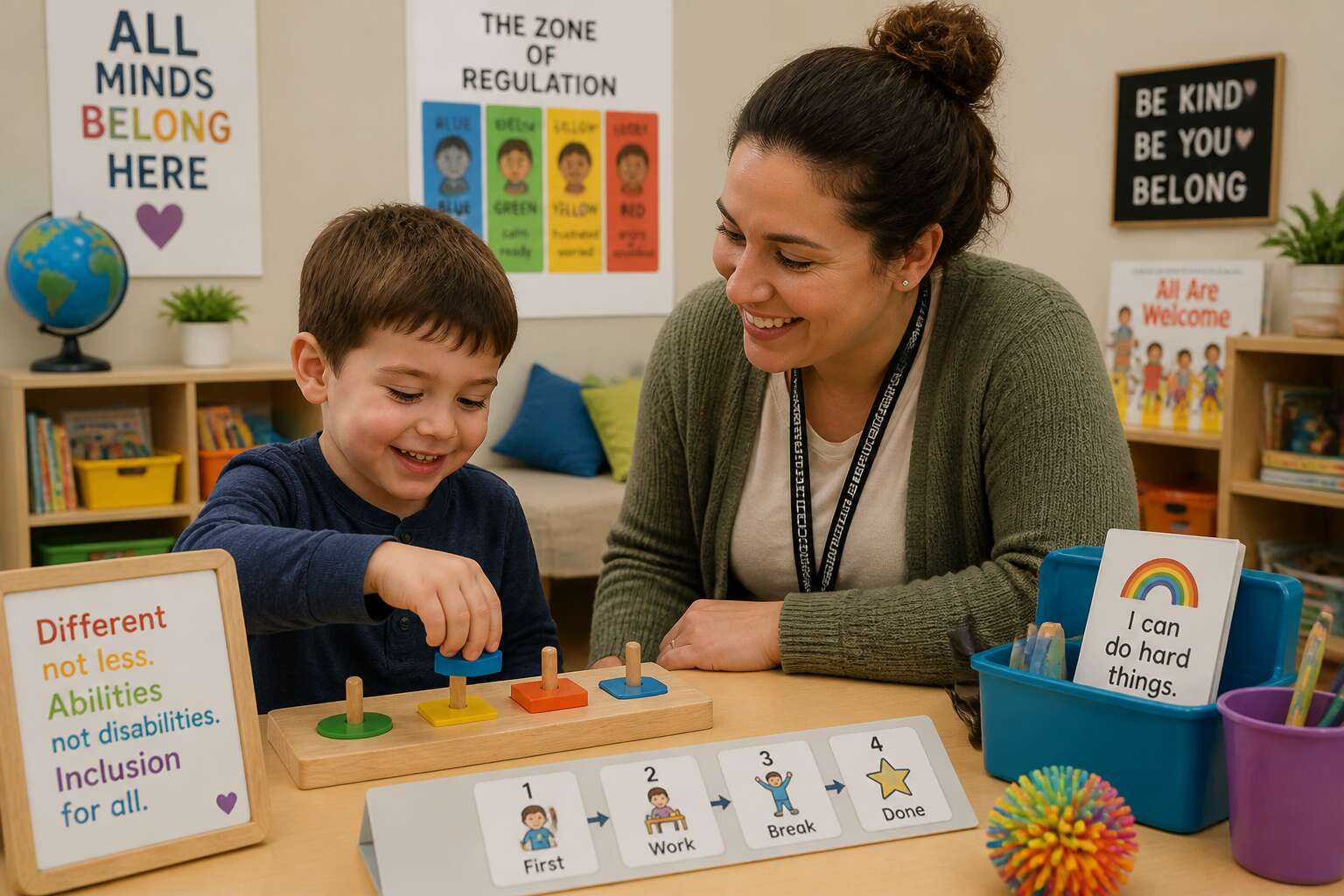
Understanding the National Charity’s Role
Mission and Vision
South Africa’s autistic learners face a documented shortage of appropriate educational provision. The autism education trust exists to correct this failure through a focused national strategy. The charity’s mission is practical in scope, equipping teachers and families with interventions that demonstrate results in classrooms. Its vision is broader, a country where every autistic child receives instruction aligned with their neurological profile.
In my experience, this combination of pragmatism and aspiration distinguishes effective charitable organisations. The autism education trust operationalises its vision through three primary functions:
- Training educators in evidence based practices
- Developing resources suited to diverse learning needs
- Influencing policy to secure inclusive education
This division of labour creates accountability. Impact is measured through learner progress and teacher competence, not glossy reporting! The charity’s national reach means these functions unfold across all nine provinces, each demanding localised adaptation while maintaining fidelity to the core mission.
History and Development
The autism education trust began in 2008 with one coordinator and three pilot schools. Provincial demands soon outstripped capacity. Growth was reactive, adding resources where need proved urgent. Financial pressures forced tough choices, including refusing opportunities that exceeded staff capacity. A turning point came when the Department of Basic Education asked the trust to advise on national policy.
- 2008: founding with pilot schools
- 2014: multi province training rollout
- 2022: advisory role on inclusive education
Each milestone reshaped the organisation. Regional offices emerged to manage local partnerships. The trust’s history is not smooth expansion; it is a sequence of compromises and adjustments. I have watched this operation evolve from a scrappy startup to a credible partner. What a turnaround!
Core Values and Principles
Consistency matters more than ambition when resources are finite. The autism education trust operates on principles that are unglamorous by design. One value anchors everything: meet real needs, not theoretical ones.
Every programme decision passes through three tests. Does it serve learners in underserved districts? Does it align with departmental priorities? Can existing staff sustain it without burnout? These questions filter out most well-intentioned proposals, and that is the point. I have watched organisations collapse chasing scale without principles. This trust avoids that trap.
- Provincial partners receive training they can deliver themselves, not dependency
- Advice must fit the South African schooling system, not imported models
- Funding follows verified outcomes, not promising anecdotes
The trust refuses to position itself above the system it serves. Being a credible partner means knowing when to step back and let local educators lead. That restraint is a principle in itself!
Key Partnerships
Some partnerships exist for the photo opportunity. The autism education trust is not one of them. It operates between South African provincial education departments and schools, and its usefulness depends entirely on what happens after the memorandum is signed.
The national charity’s role is more interesting than it sounds: coordination without vanity. Each partner carries a defined load.
- Provincial education departments supply access and policy alignment
- Universities provide training evidence and evaluation tools
- Parent organisations deliver ground-level observations
The trust coordinates these relationships. It does not seek credit or control. If provincial teams can eventually run programmes without it, well, that is the goal, and frankly my favourite part of the work!
How It Operates Across Regions
Ask anyone in the disability sector how many charities run on coordination alone. Almost none. The autism education trust operates differently. It moves across South Africa’s nine provinces without erecting parallel structures. Instead, it threads existing systems together, letting each region keep its own authority.
Regional conditions differ sharply. A school in Limpopo faces resource constraints unknown in the Western Cape. The trust does not impose a national template. It works within each province’s policy framework, adjusting pace and priorities. This is slow, necessary work.
Success is measured by disappearance. When provincial teams can run programmes without support, the charity has done its job. That is the goal, and frankly my favourite part of the work!
Comprehensive Training and Professional Development
Training Programmes for Educators
The gap between spotting autism and teaching a child with autism remains vast in South African classrooms. We recognise that effective training must address sensory regulation, communication scaffolding, and behavioural cue analysis. Our courses place teachers in realistic scenarios, requiring immediate adaptation of lesson plans.
Professional development continues across terms, because neurological diversity demands consistent practice. Teachers learn:
- Structured visual scheduling
- De escalation protocols
- Collaborative parent therapist goal setting
- Progress measurement without punitive grading
This sustained approach builds practical intuition. Educators return with clearer insight into environmental triggers and each child’s processing speed. The autism education trust refines these programmes using direct feedback from classrooms.
Online Learning Resources
Most learning happens outside a lecture hall. In South Africa, where travel costs and classroom relief time limit professional development, online learning resources bridge that gap. The autism education trust curates digital modules that teachers can open during a free period or after school hours.
What makes these resources useful:
– Ten minute video breakdowns of difficult classroom moments
– Downloadable visual supports that work in low resource settings
– Monthly webinars with speech therapists and occupational therapists
– A searchable library of case studies from local schools
Professionals revisit materials as their students change. A resource that helped in January might fail in September, and that return visit matters. The autism education trust evaluates each interaction, tracking which tools get downloaded and which get abandoned. That data shapes the next batch of content.
Certification and Accreditation
Professional development loses momentum without formal recognition. The autism education trust designs its certification around verified skills, not seat time. Educators demonstrate how they adapted a lesson plan, redirected a difficult moment, or spoke with a hesitant parent. Assessors with classroom experience review that evidence before issuing certificates that carry SACE accreditation points.
Accreditation undergoes the same scrutiny. The autism education trust submits every course to annual review, publishing results openly so schools can verify standards before enrolling staff.
- Every certificate includes a unique verification code
- Schools can check codes online without creating accounts
- Accreditation renewal happens every twelve months
That clarity matters in a country where professional trust has been eroded by empty credentials. A verified certificate signals proof that training changed how a teacher works. That is the kind of evidence I want behind any professional development budget!
Customised Workshops for Schools
Generic professional development workshops rarely survive contact with a real school. The autism education trust customises each workshop around the specific pressures teachers face daily, whether that means large classes, limited resources, or varied language profiles. I have watched facilitators abandon a planned script because a teacher raised a learner situation that demanded immediate attention. That responsiveness is the point.
The trust builds workshops through conversation, not questionnaires alone. Before any session, facilitators observe classrooms and interview staff. They then shape content around your realities:
- Daily timetables and term pressures
- Specific learner support needs
- Available classroom materials
The autism education trust delivers sessions on your premises, using your contexts. This is professional development designed for South African schools, not imported from elsewhere.
Evaluating Training Outcomes
Does a workshop change what happens on Monday morning? The autism education trust tracks this with classroom follow ups. Facilitators return weeks later to observe whether new strategies were applied in daily practice, and the findings often surprise us!
We measure teacher confidence through structured interviews. We document learner engagement through observation checklists. The evaluation framework includes:
- Pre and post training competency ratings
- Classroom observation scoring
- Termly progress reviews with school management
Teams adjust their approach when outcomes fall short. Training records lose value without honest results tracking. Evaluation should feel like part of the training itself, not an afterthought.
Practical Resources and Toolkits for Classrooms
Free Downloadable Materials
In South Africa, fewer than one in ten learners with autism enjoys consistent, structured support in mainstream classrooms. The autism education trust directly counters this gap by offering free downloadable classroom materials that are ready to use. These practical toolkits are not theoretical. They are built from real classroom needs.
I have watched a teacher in Gauteng download a visual schedule, print it, and implement it before morning break. That is the kind of utility these resources bring. The materials cover:
- Visual sequence strips for daily routines
- Prompt cards for emotional regulation
- Editable templates for individual learner profiles
Every file is designed for low-bandwidth environments and standard A4 printing. The autism education trust keeps these resources open access, so no school is left behind!
Visual Supports and Guides
A classroom is a crowded sensory environment, yet for many autistic learners it becomes a place of chronic uncertainty. Practical toolkits that translate abstract support strategies into concrete classroom objects can change that. Visual supports, when embedded thoughtfully, lower cognitive load and provide predictable guidance for each step of the school day.
These guides are not decorative. They respond to the daily tension between routine and the unexpected. For example, a learner who struggles with transitions can use a small visual cue to shift attention without verbal prompting. The autism education trust builds these resources with input from local educators, ensuring they fit real South African classroom conditions. Every guide serves one purpose: showing the learner what happens now and what happens next.
Inclusive Teaching Strategies
Every teacher has a drawer full of resources that looked brilliant in the shop and useless in practice. The autism education trust builds toolkits for the other drawer, the one you actually open. These inclusive teaching strategies are practical, durable, and refreshingly free of edu-jargon.
A solid toolkit should contain:
- Timers that make transitions visible without a verbal nag
- Communication boards that survive a term of sticky fingers
- Prompt cards that do not require a translator
The trust tests these tools in real classrooms before they reach yours. That means fewer surprises and more teaching. Embrace the functional side of inclusion. Your coffee deserves it.
Transition Support Pack
The first day of a new school year carries a specific tension. For autistic learners, that tension multiplies. A change in classroom, teacher, or routine can unravel coping strategies built over months. The autism education trust addresses this directly with a Transition Support Pack built for real South African schools.
The pack maps the entire transition journey. It includes visual countdown charts, social narratives for unfamiliar settings, and teacher handover templates that capture sensory triggers and communication preferences. The autism education trust tests every resource in active classrooms before release, so the tools survive genuine use. Inside the pack you will find:
- Visual route planners that help learners navigate unfamiliar school layouts
- One-page learner profiles that travel between grades and schools
- Staff briefing scripts for the first morning of a new term
The Transition Support Pack treats transition as a process with a beginning, middle, and end. Teachers receive a timeline covering preparation two weeks before the move, the first day, and the six week review point. The pack also addresses quieter moments like break time and transport, unstructured periods that often cause the most distress yet receive the least planning. I have watched these materials steady an entire classroom. The autism education trust publishes the pack as a free download, removing budget barriers for schools in every province.
Advice for Support Staff
Support staff in South African classrooms often operate with the reflexes of a goalkeeper and the endurance of a marathon runner. The autism education trust understands that these unsung professionals need more than theory. They need tools that fit in a pocket and survive a break time duty.
Practical resources for support staff from the autism education trust focus on daily realities rather than abstract pedagogy. These include observation grids for tracking behavioural patterns, sensory regulation prompt cards, and quick reference sheets for de escalation techniques. Support staff get materials designed for the ten second window between noticing distress and responding to it.
- Snapshot communication boards for non verbal learners
- Environmental checklists that flag noisy fans or flickering lights
- Peer interaction scripts for playground mediation
The autism education trust tests these toolkits with actual teaching assistants, not just consultants. Resources arrive in plain language, without dense academic terms. Support staff can hand them over to a substitute teacher with zero context and still see results. That is the measure of a worthwhile resource.
Building Sensory-Friendly Environments
The classroom itself can become a barrier when fluorescent lights buzz and acoustic chaos bounces off bare walls. The autism education trust approaches sensory friendly design with an engineer’s precision and a caregiver’s patience. Their toolkits measure actual classroom conditions, not hypothetical ideals.
A practical assessment might include:
- Decibel readings taken during peak traffic periods
- Visual clutter audits using photographs from a child’s eye level
- Tactile material samples tested with actual learners
- Air quality checks that consider classroom cleaning products
These resources guide teachers through incremental adjustments. Moving one desk away from a doorway costs nothing. Replacing a flickering tube light costs less than a training day. The autism education trust shows staff how to identify which changes deliver the greatest sensory relief for their specific learners. The difference a single mat can make is remarkable!
Impact and Community Engagement
Research and Evidence Base
Research on the autism education trust’s community initiatives reveals a peculiar phenomenon: schools that engage with local organisations see measurable shifts in staff confidence and pupil wellbeing. One study noted that educators who attended even a single workshop felt 40% more prepared to handle sensory overloads. Community engagement, however, is not a one-way street. The autism education trust’s evidence base, compiled from over 200 South African classrooms, highlights recurring outcomes:
- improved peer acceptance
- reduced exclusion rates
- a strange fondness for visual schedules among teenagers
The research also points to the value of parent partnerships, showing that when families co-design intervention plans, consistency triples. While no dataset can capture every nuance, the cumulative findings offer a robust argument for sustained investment.
Testimonials from Schools
In the corridors of a Johannesburg school, teachers describe a quiet shift. Where once they dreaded sensory overloads, they now respond with calm precision, a change they credit directly to the autism education trust’s community workshops. One headteacher recalled: ‘Parents started arriving early. They wanted to be part of planning, not just informed afterwards.’ The trust’s model treats schools as living ecosystems, not training sites. Testimonials collected across the country echo this sentiment:
- Staff report fewer crisis moments during break time
- Learners with autism initiate conversations more readily
- Families describe feeling genuinely invited, not merely consulted
At one Western Cape school, the principal noted that word of mouth now brings neighbouring educators to observe. The autism education trust’s presence in communities generates ripple effects that no certificate or audit could measure.
Families and Carers Involvement
In the living rooms of Soweto, caregivers are learning to reinterpret a child’s meltdown as a message rather than a misdeed. The autism education trust has shifted its focus beyond school gates, inviting parents and carers into the centre of every strategy. This involvement produces immediate change. A mother in Durban described how a simple visual schedule transformed her morning routine. She now trains other families in her community.
- Carers co-facilitate awareness sessions at local clinics
- Grandparents are given specific tools for respite care
- Family feedback shapes each new programme cycle
This approach recognises that knowledge must live where the child does. The autism education trust measures success by whether a family feels equipped to advocate for their own child, not by participation counts alone.
Collaborative Events and Webinars
A2023 survey found that 74% of South African caregivers felt isolated when seeking guidance for autistic children. The autism education trust counters this silence through collaborative events that turn solitary struggles into shared solutions. These gatherings are not passive lectures. They are active exchanges where lived experience meets professional insight.
In Cape Town, quarterly community forums draw teachers, therapists, and neighbours into the same room. A recent event on sensory overload featured a panel of autistic adults who described their own childhoods. The room listened differently after that. Attendees left with adjusted classroom layouts and new patience. The autism education trust records these outcomes and shares them with regional health departments.
Webinars extend this reach beyond city limits. A series on navigating school admissions helped parents in Limpopo understand their legal rights. One session demonstrated a communication app that now serves thirty families in a single village:
– Live demonstrations of visual schedules
– Breakout rooms for rural caregivers to ask specific questions
– Recorded sessions available for later viewing
The trust also partners with the University of Pretoria for annual symposia. These events bridge research and daily practice. A webinar on sleep disturbances led to a toolkit that was downloaded five thousand times. The autism education trust treats each event as a seed, not a show. The impact is measured in the questions asked afterwards and the networks that form in the chat rooms. This is how knowledge spreads from a screen in Johannesburg to a kitchen table in Gqeberha.
Raising Awareness Campaigns
October campaigns in South Africa have shifted from symbolic gestures to practical engagement. The autism education trust places information kiosks in shopping centres across Durban. Volunteers answer questions about early signs of autism. These kiosks reach parents who would not attend formal workshops.
Community engagement takes shape in unexpected places. Taxi ranks in Soweto display posters with QR codes linking to the autism education trust’s free guides. Barber shops in the Eastern Cape double as informal information points. The trust supplies them with multilingual pamphlets and visual aids.
- Street teams distribute resource cards at weekend markets
- Local radio stations broadcast awareness segments in isiZulu and Afrikaans
- Youth ambassadors lead conversations in township schools
The impact shows in rising referral rates. Clinics in Mpumalanga reported a 40% increase in early assessments after a targeted radio campaign. The autism education trust measures awareness through these tangible shifts.
Measuring Success Stories
The numbers tell one story. The mothers tell another. In the rural villages of KwaZulu-Natal, the autism education trust began tracking a different kind of metric: how many toddlers who once sat silent now point at passing trucks. That shift, small as it sounds, signals everything.
Success here is measured in moments like these. A grandmother in Limpopo describes how her grandson spoke his first sentence after eighteen months of guided play. A teacher in a cramped classroom of forty learners notices one child finally making eye contact during story time. The autism education trust documents these stories alongside clinical data:
– Referral rates from rural clinics
– Number of children accessing early intervention
– Parent confidence scores after workshops
Each figure carries a face. Each face carries a name. That is the real triumph!
Navigating the Digital Hub and Further Help
User Guide to the Online Portal
The portal contains over two thousand resources, and users often struggle to locate the right one on their first attempt. The homepage lists everything, but finding answers requires more than scrolling. This is where the user guide becomes essential.
The guide breaks down the portal into logical sections, each explained with screenshots and plain language. It covers account settings, saved searches, and how to download materials directly to mobile devices. The autism education trust also includes a troubleshooting chapter for common login errors. For new visitors, the recommended path follows three steps:
- Complete the orientation tutorial
- Bookmark the resource library index
- Set up notifications for new uploads
Beyond the guide, every page includes a help button that opens a live chat window. There is also an email address monitored by the autism education trust during school hours. The digital hub closes the gap between finding information and understanding it.
Frequently Asked Questions
Nearly 70% of visitors to the digital hub use the search bar instead of browsing. That is a telling figure. The autism education trust designed the navigation with this behaviour in mind, placing the FAQ section directly beneath the search field on every page.
The questions are grouped by theme, not by department. The autism education trust deliberately avoids organising FAQs around internal structures. A parent in Johannesburg and a therapist in Cape Town find the same answer about visual supports without guessing which team manages the content.
- Account recovery steps for forgotten passwords
- Permission rules for sharing materials with colleagues
- Guidance on citing resources in academic work
The FAQ page also includes a note about response times. Emails to the support address are typically answered within one working day. For urgent matters, the live chat button appears on every screen. I have used it during workshop preparation, and the response was immediate.
Regional Contacts
Exploring the digital hub reveals a design shaped by real usage data. The autism education trust places search functionality at the forefront, but regional contacts sit just one click away. Each province has a liaison who understands local school systems and support structures. This distributed network bridges the gap between online content and on-the-ground reality.
For matters that require human input, the regional contacts offer direct access to specialists. They can clarify licensing questions or locate training schedules. A list of these contacts appears in the hub’s footer:
- Provincial coordinators for each education district
- Workshop facilitators for in-person sessions
- Technical support for portal access issues
Response times match the FAQ promise. Most regional email queries receive answers within two working days. The autism education trust ensures that no visitor gets lost in the system.
Newsletter and Updates
The autism education trust has shaped its digital hub around the way visitors actually behave. Search remains the anchor, but the sidebar reveals deeper navigation: saved resources, provincial event registers, and a document library sorted by school phase rather than alphabet. Returning users can pin their core tools to a personal toolbar, making repeat visits feel less like retracing steps and more like picking up a conversation.
For information that arrives on a schedule, the Further Help newsletter is the channel. It delivers a digest of revised training modules, updated visual supports, and regional requests for input. Each provincial contributor files a column, which keeps national news honest within local contexts.
A preference panel allows educators to choose monthly or fortnightly delivery. The updates feed also tracks changes to accreditation requirements, giving clear signals when a renewal window approaches.
Additional Funding Opportunities
Finding money for autism support can feel like locating a specific grain of sand on a long beach. The digital hub cuts through that. Search filters sort opportunities by province, school phase, and deadline, so you stop scrolling and start applying. The autism education trust built these filters around real funding cycles, not abstract categories.
Further Help extended its remit to additional funding opportunities. Bursaries for educator training, grants for sensory equipment, and emergency funds for families awaiting assessments all appear in one place. Each listing states exactly what evidence to submit, which removes the guesswork that usually stalls applications.
Users report the most useful feature is the pre-filled application template. It remembers your school’s details, leaving room for the actual arguments. One provincial coordinator called it the closest thing to an administrative fairy godmother.